Guest Post: If My Work All Day Goes Unnoticed, Did It Really Matter?

This is a guest post from my wife, Melanie. She originally wrote this post for Biblical Woman, the blog site for the Women’s Programs at Southwestern Baptist Theological Seminary. The post originally appeared here.

We all know the age-old question, “If a tree falls in the middle of the forest, does it make any noise?” What is really being asked is this, “If something happens and a person does not see it, did it really happen?” Many days, this is a question that is unconsciously dancing in the back of my mind. As a wife and mom, many things I do are not observed by other people.

If no one sees my work, did I really do anything all day? And does it matter if I metaphorically “fall down” if no one witnesses it? The answer is a resounding YES in God’s eyes!

Even if no one is taking notice, we still have an audience of one.

Our culture presents a great temptation to constantly perform for others. The increased use of social media in the last few years has only heightened it. Everyone wants to stand out, be noticed, speak up, and have a voice. If we fade into the crowd, get overlooked, are ignored, or are silenced, we become discouraged and begin to believe that whatever we are doing must not matter. However, in God’s economy, the exact opposite is true.

All throughout Scripture, God shows favor on the unnoticed one. He uses the meek or common to make an extraordinary impact.

One of the greatest examples is the contrast set up between King Saul and King David. When Saul is first described, it is in comparison to other men. “There was not a more handsome person than he among the children of Israel. From his shoulders upward, he was taller than any of the people”  (1 Sam 9:2). Saul was a man that others noticed. However, in regard to his heart before God, Samuel describes it as rebellious and stubborn and declares, “because you have rejected the word of the Lord, He also has rejected you from being king” (1 Sam 15:23).

Saul received the praise of men, but was rejected by God.

In contrast, when God chooses David to be king, he is lowly in comparison to his brothers. The fact that God had to instruct Samuel to “not look at his appearance or at his physical stature” (1 Sam 16:7) reveals that David might not have been too impressive in those categories. On the stage among peers, David might have been overlooked.

However, God is an audience of one, and he notices the heart and takes heed of actions and attitudes that go completely unnoticed by others. 

David wrote many of the Psalms from the inside of a cave as he ran and hid from Saul. No one was there to hear his words. It was only him crying out to God. Alone. Now, let’s use the proverbial question at the beginning of this article, “If David cried out in a cave alone in the wilderness, did anyone hear him?” According to scripture, the answer is YES God heard him. God heard him and thought that David’s raw emotions and words were so powerful that He saw it fit to place them in Scripture as a testimony for all eternity of how we too can cry out to God in the deepest and darkest places.

In college, I had the privilege of studying under Dr. Les Hughes who is now the pastor of Highview Baptist Church in Louisville, KY. He wrote a book called, The Sound of God’s Applause that has been very powerful in my life and in the life of my husband.  In one of his chapters, he asks several questions that encourage the reader to reflect on the question “Am I seeking the approval of people?” As I have read through those questions many times, I am constantly convicted about how much stock I put in other’s opinions of me.

I have found that, as my desire to please others increases, my concern over pleasing God decreases. As I put more and more stock in what others know of me, I put less and less importance on how God deeply knows me.

Even if no one else sees the work or deeds that I do, God sees.

Even deeper, He sees the attitude of my heart. I want to learn to truly serve others, expecting nothing in return.  I desire to be content in doing good deeds, not for the applause of men, but for the pleasure of my Father.  It does not matter if no one else takes notice; it is God’s applause that I crave.
Are Corporations People Too?: Hobby Lobby and Religious Liberty

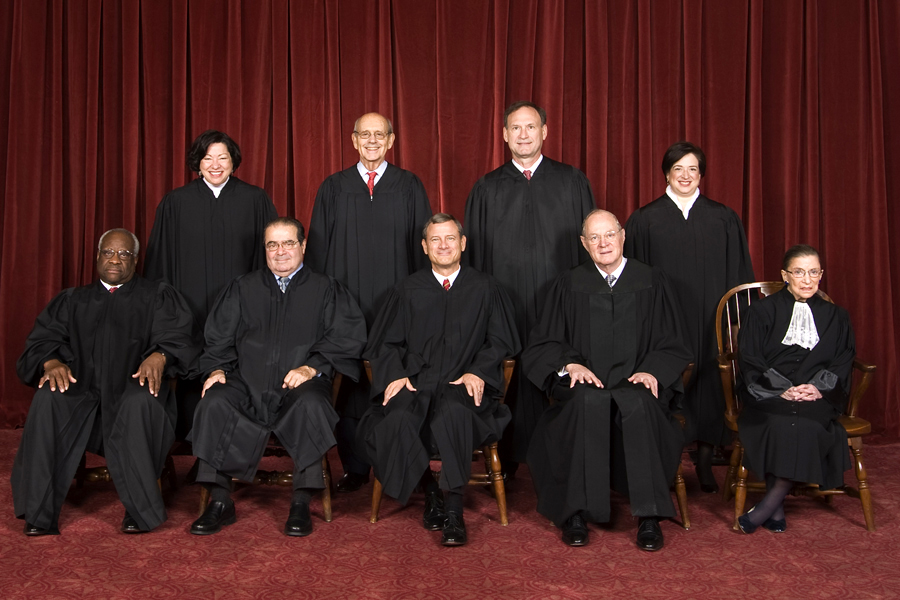
Supreme_Court_US_2010Who would have ever imagined that a craft store chain owned by a Christian family would be at the center of a Supreme Court case about sexuality, abortifacient drugs, the role of corporations, and religious liberty? Oral arguments were heard today in the Supreme Court case Sebelius v. Hobby Lobby. The central point of the case is whether or not the Green family, owners of Hobby Lobby and Mardel Christian bookstores, has the right to exercise their religious freedom in opting out of the Health and Human Services (HHS) mandate requiring employer-provided health plans to offer emergency birth control drugs at no charge to their employees. The Greens have objected on religious grounds that such emergency birth control options are tantamount to abortion and that providing abortion-inducing drugs is a violation of their deeply held religious beliefs.

Trying to predict what the Supreme Court will decide is an exercise in futility, so I will not go down that road. However, I do want to highlight a few interesting notes from today’s oral arguments.

The first is not all that surprising (and possibly not all that interesting)—the high court appears divided. From the best one can tell from the questioning, the Supreme Court is split 4-4 with Ginsburg, Breyer, Kagan, and Sotomayor apparently siding with the government and Roberts, Thomas, Scalia, and Alito leaning towards Hobby Lobby. This leaves Justice Anthony Kennedy as the deciding vote in an otherwise divided Court. This is familiar territory for the current version of the Supreme Court.

The second item of note is that the role of a corporation seems to be a big question. Some of the liberal justices seemed to imply that corporations should simply be able to pick up the tab for the healthcare expenses or fees for not providing healthcare with no impact on the business or the economy. They did not seem to take into account that these healthcare costs have to be paid by someone and that the costs would most likely be passed along to the customer. Justices Kagan and Sotomayor also pressed Paul Clement, the attorney arguing for Hobby Lobby, about whether corporations could opt out of other healthcare options for their employees. Lyle Denniston reports that they “suggested that if corporations gain an exemption from having to provide birth-control services for their female employees, then the next complaint would be about vaccinations, blood transfusions, and a whole host of other medical and non-medical services that a company or its owners might find religiously objectionable.”

On the other hand, Justice Alito pushed back against Solicitor General Donald Verrilli regarding the purpose of corporations. He asked the Solicitor General if the only purpose of corporations was to “maximize profits.” If the object is only to maximize profits, then corporations would have no other rights. However, if corporations serve other purposes, then they might have the right to protection under the free exercise of religion clause in the First Amendment.

The third item is the most interesting development in my opinion. It relates to the rights of a corporation to make a claim regarding discrimination. The government argued that for-profit corporations like Hobby Lobby have no standing to file a claim against the government based on religious discrimination. On the surface this seems to make sense because corporations are not churches, nor are they individuals with religious beliefs. However, the government has already held that corporations can file claims based on racial discrimination. In the same sense, corporations are not individuals of a particular race or ethnicity. The racial discrimination claims have typically been based on the race and ethnicity of the owners.

Applying the same standard to the religious freedom aspect of the Hobby Lobby case, it would appear that the Green family’s deeply held religious beliefs (and clear articulation of those beliefs in company documents) would provide the corporation with the same protections as those guaranteed to them as individuals. This argument could prove to be central in the upcoming decision of the Court.

Once again, we will be left to wait for months until hearing the decision of the Supreme Court that will most likely come in June. Until then, it is futile to speculate what the Court will decide. However, there is one thing that we can do. We can pray for the justices of the Supreme Court that God would grant them wisdom in judging these matters. We should pray for godly wisdom that they would rule according to God’s will. We should pray that they would value life in the way that God values life—seeing those in the womb as no different than a full-grown adult (Psalm 139:13–16).

I urge you to join me in prayer for John Roberts, Antonin Scalia, Anthony Kennedy, Clarence Thomas, Ruth Bader Ginsburg, Stephen Breyer, Samuel Alito, Sonia Sotomayor, and Elena Kagan. The future of religious liberty in the United States is in their hands.
_________________________
Lyle Denniston, “Argument recap: One hearing, two dramas,” SCOTUSblog, March 25, 2014.

Derrick Morgan, Hans von Spakovsky, and Elizabeth Slattery, “How the Supreme Court Justices Reacted to Today’s Hobby Lobby Arguments,” The Foundry, March 25, 2014.

Ilya Shapiro, “Is There No Alternative to Forcing People to Violate Their Religious Beliefs?” Cato Institute, March 25, 2014.

Guest Post: If Paul Were on Facebook

Facebook LogoThis is a guest post from my wife, Melanie. She originally wrote this post for Biblical Woman, the blog site for the Women’s Programs at Southwestern Baptist Theological Seminary. The post originally appeared here.

Vaccines. Education choices for our children. What we eat, what we don’t eat. Working moms, stay at home moms. Attachment parenting, Baby-Wise.  Dating versus courtship. These words alone can make a woman’s blood begin to simmer without her even realizing it. They are the same things that make up what popular culture calls the “mommy wars.” Every woman has an opinion on these issues and no two women are completely in agreement.

Let’s just face it, ladies. We all think we are right and we have the articles to prove it.

But as sisters in Christ, the battles shouldn’t be between us, for if we use all of our ammunition on each other, we have none left to fight the spiritual battles of this world.

In Rome, during the times of Paul’s writings, the believers were under strong persecution.  They were fighting for their lives, struggling for the ability to worship freely, and all the while sharing with non-believers the beautiful saving grace of Jesus Christ. It would be fair to say that they had to be on guard at all times against the enemy.

However, the believers were fighting another type of battle. One that wasn’t even necessary. Romans 14:2 and 5 say, “For one believes he may eat all things (meaning meat likely sacrificed to idols), and he who is weak eats only vegetables…. One person esteems one day above another; another esteems every day alike.” The Christians in Rome were disagreeing over what to eat and when to worship. At the time, these two issues were not paramount in God’s eyes and only causing strife and discord among the believers.

While we no longer argue over these issues, Romans 14 speaks volumes to all of us who find ourselves caught up bantering back and forth on issues that are not of eternal significance.  

Paul has given us four things to consider before we enter into disagreements with other Christians on hot topic issues.

  1. Check Your Attitude: Before Paul even gets going in chapter 14, he says in 13:13-14, “Let us walk properly…not in strife and envy. But put on the Lord Jesus Christ, and make no provision for the flesh, to fulfill its lusts.” When I see someone post something on social media that I disagree with, it is imperative that I immediately die to my flesh and not allow the door to open to strife. There is enough fighting all around us that we, as believers, do not need to join in the noise. “Blessed are the peacemakers.” Jesus says in Matthew 5:9. If our only goal is to argue, Paul calls that fulfilling the lusts of our flesh. That goal is not fitting for a child of God.
  2. Don’t Sweat the Small Stuff: Paul goes on to instruct in Romans 14:1, “Receive one who is weak in the faith, but not to disputes over doubtful things.” Paul is telling the believers who ate meat to receive (fellowship with) those who only ate vegetables and not to argue with them about it. Most of us believe that whoever agrees with us is strong in the faith and those who disagree with us are weak. Out of our own arrogance, we consider ourselves the plumb line to spiritual strength. However, I love how the Holman Christian Standard Bible says in its study notes: “The believer who is weak in the faith is overly conscientious about matters not regulated by Christian revelation.” Are you overly concerned with proving your point on issues that aren’t paramount to the Christian faith? I understand that, as women, we must make up our minds about certain topics. It is important that we, along with our husbands, make decisions as to how our family works.  However, where scripture does not have clear lines, we must also give grace freely to our sisters who might choose differently from us.  Within our friendships, there is vast opportunity to encourage, love, and support. Let us discuss those topics on Facebook. Let us tweet out those announcements. Paul describes it this way in verse 19, “Therefore let us pursue the things which make for peace and the things by which one may edify another.
  3. Everyone’s Convictions Are between Themselves and the Lord: “He who observes the day, observes it to the Lord; and he who does not observe the day, to the Lord he does not observe it. He who eats, eats to the Lord, for he gives God thanks; and he who does not eat, to the Lord he does not eat, and gives God thanks” (Romans 14:6). Our God is a personal God, and He desires to have a personal relationship with us. Within that wonderful, personal relationship, we have a great privilege to come before the Lord in prayer and humility and ask Him to guide us in certain choices. Just like Solomon, if we ask for wisdom, God will give it to us. I remember when my son was just a newborn. We were trying to make decisions about vaccines and there were millions of voices out there trying to tell us to what to do. We tried to gain wisdom from our doctors and family, but it seemed like everyone we asked gave us a conflicting opinion from the one before. Finally, just Evan and I discussed it and prayed for wisdom from God, and we made our decision. There will always be people that disagree with us, but we know we came to the best decision for our family after seeking the Lord’s wisdom.
  4. Being right is not the ultimate goal: Our culture celebrates personal liberty. We are free to say anything we desire, especially in the world of social media. However, as believers, we must bind this liberty with the law of love. Paul admits to the Roman believers that, in regard to the meat they were discussing, nothing was unclean. However, if someone had a personal conviction and considered it unclean, to him it is unclean. He explains in verse 15, “Yet if your brother is grieved because of your food, you are no longer walking in love. Do not destroy with your food the one for whom Christ died.” Paul is saying that if someone has a personal conviction about an issue, it is not our job to argue with them or flaunt our freedoms. You might win the argument, but you have also destroyed a fellow sister in Christ.

If Paul were on Facebook, he would still be calling us to walk in love. Love is patient and love is kind…even on Facebook.

Good Reading: The Culture of Death Bares its Teeth

Albert Mohler, president of Southern Baptist Theological Seminary, posted an interesting article regarding a recent admission by Cecile Richards, president of Planned Parenthood, regarding her belief about when life begins. Richards was interviewed on Fusion TV and was asked when she believes that life begins. After dodging the question initially, Richards stated:

For me, I’m the mother of three children. For me, life began when I delivered them. They’ve been probably the most important thing in my life ever since. But that was my own personal decision.

Mohler then comments on her admission by stating:

So life begins at delivery. Until then, no life, no dignity, no sanctity at all. This defies any moral sense, but it also defies modern biology. Cecile Richards did not try to argue the now infamous trimester argument of Roe v. Wade or a point of viability or any other argument about fetal development. As her comment makes clear, in her worldview the fetus doesn’t matter at all.

She identified her three children as “probably the most important thing in my life” since their delivery. Were they nothing to her in her womb? Each of those three precious children was precious in the womb — at every point of development.

Candid admissions of a worldview like this one are rare, but Cecile Richards’ statement perfectly explains her advocacy of abortion at any time for any reason. In her interview the Culture of Death bares its teeth.

Mohler’s analysis is helpful, and this short article is well worth your time. Read the entire article here.

_________________________

Albert Mohler, “The Culture of Death Bares its Teeth: Planned Parenthood Leader Says Life Begins at Delivery,” AlbertMohler.com, March 3, 2014.

Federal Judge Strikes Down Texas Marriage Amendment

same sex marriage graphcIn what is now a string of cases decided by federal judges regarding state laws, U.S. District Judge Orlando Garcia has struck down Texas’ constitutional amendment defining marriage as a relationship between one man and one woman. After the state legislature presented the amendment in 2005, 76% of Texas voters approved the addition of the amendment to the state constitution.

Judge Garcia immediately stayed his ruling pending an inevitable appeal. This should be quite interesting considering that the man who will be responsible for the appeal, Texas Attorney General Greg Abbott, is the hands-down favorite to receive the Republican nomination for governor. Abbott will be responsible for filing the appeal while also managing his campaign against likely Democratic nominee Wendy Davis.

This case came about when a lesbian couple filed suit against the state for not recognizing their same-sex marriage performed in Massachusetts in 2009. According to the Fort Worth Star-Telegram article, the plaintiffs “argued that the state’s gay marriage ban had caused them undue hardship that other married couples do not face. For example, the couple have one child together, but because Texas does not recognize their union, only one parent’s name was allowed on the birth certificate.”

The logic of the names on a birth certificate is quite interesting.  Biologically speaking, only one of the women is the mother although it is likely they both wanted to be listed as mothers. This demonstrates how the redefinition of marriage is attempting to separate the relationship completely from any aspect of procreation. Assuming the couple used an anonymous sperm donor as the father, then standard procedure would be to list the woman who gave birth as the mother. A second mother is biologically impossible for the purposes of a birth certificate. It is unclear how this causes undue hardship related to a medical record that is intended to connect a child to his/her biological parents.

While marriage does not require procreation, separating marriage and procreation completely is illogical. Melissa Moschella has recently written that children have a right to know who their biological parents are and a right to a relationship with them. She states:

The biological parent-child relationship is uniquely intimate and comprehensive, at least from the child’s perspective. A child’s relationship to his biological parents is the closest of that child’s human relationships. It is identity-determining. To be born of different parents is to be an entirely different person. This, combined with the observation that receiving proper care is crucial for the child’s current and future well-being, implies that biological parents are the ones with the strongest obligation to ensure that their child is well-cared-for.

When someone makes the claim that they have a right to produce a birth certificate containing two mothers and no father as the biological record of the child’s birth, they undermine the right of the child to know his genetic history. If marriage includes unions other than those between a man and a woman, it undermines the creation ordinance designed to be the avenue of procreation and perpetuation of the human race. This is not an undue hardship placed on the couple by the state. It is Biology 101.

In just the last two months, marriage amendments have been overturned by judicial action in Utah, Oklahoma, Virginia, and Texas. Seventeen other states allow same-sex marriage (or are in the process of allowing it). In addition, U.S. Attorney General Eric Holder just recently told state attorneys general that they are not obligated to defend traditional marriage laws in court if they do not want to do so.

I tell my classes every semester that our children will grow up with a different understanding of marriage than what we have. I have been fighting and praying that we would be able to stave off the redefinition of marriage. Now it seems that the U.S. Supreme Court will have no choice but to hear these cases and rule on them, potentially providing a new definition of marriage.

Honestly, I am not optimistic about any future SCOTUS rulings; however, we do not place our hope in judges, governors, legislators, or presidents. Instead, our hope is in Jesus Christ, and he has already declared:

Have you not read that he who created them from the beginning made them male and female, and said, “For this reason a man shall leave his father and mother and be joined to his wife, and the two shall become one flesh”? So they are no longer two, but one flesh. What therefore God has joined together, let no man separate. (Matthew 19:4-6)

*If you are interested in learning more about how to respond to the campaign to redefine marriage, consider attending the It Takes a Family conference on the campus of Southwestern Baptist Theological Seminary, co-hosted by the Ruth Institute and the Land Center for Cultural Engagement, on April 11, 2014. More information and registration is available by clicking here.

_________________________

Edgar Walters, “Federal judge rules Texas’ gay marriage ban unconstitutional,” Star-Telegram, February 26, 2014.

Melissa Moschella, “The Rights of Children: Biology Matters,” The Public Discourse, February 20, 2014.