Good Reading: Tracking Christian Sexual Morality in a Same-Sex Marriage Future

The Public Discourse has posted a very interesting article from Mark Regnerus on the connections between support for same-sex marriage and other issues related to sexual morality. Regnerus is associate professor of sociology at the University of Texas at Austin and became (in)famous for an article he published about the effects on children raised in a same-sex couple households.

In this article, Regnerus documents the beliefs of churchgoing Christians (attending 3 or more services per month) regarding sexual morality. He specifically looks at the differences in beliefs between those who support same-sex marriage and those who oppose same-sex marriage. The related issues include pornography, cohabitation, hook-ups, adultery, polyamory, and abortion.

Here are some of the highlights:

Primarily, this exercise concerns the attitudes of all churchgoing Christians who express support for same-sex marriage. And since the LGBT population remains a small minority (and even smaller in organized religious communities), it’s reasonable to conclude that the sexual morality that “welcoming” congregations or individual Christians profess will have largely been fashioned—and maintained—by sympathetic heterosexuals. These are and will remain the majority (and hence, the norm) in all congregations, save for the Metropolitan Community Church and perhaps scattered congregations of the United Church of Christ.

Regnerus includes a table with the numbers and makes some observations:

So what do the numbers say? The table above displays the share of each group who either “agree” or “strongly agree” with the seven statements listed above. At a glance, there is a pretty obvious fissure between Christians who do and do not oppose same-sex marriage. More than seven times as many of the latter think pornography is OK. Three times as many back cohabiting as a good idea, six times as many are OK with no-strings-attached sex, five times as many think adultery could be permissible, thirteen times as many have no issue with polyamorous relationships, and six times as many support abortion rights. The closest the two come together is over the wisdom of a married couple staying together at all costs (except in cases of abuse).

Churchgoing Christians who support same-sex marriage look very much like the country as a whole—the population average (visible in the third column). That answers my original question. What would a pro-SSM Christian sexual morality look like? The national average—the norm—that’s what.

He concludes:

Churchgoers who oppose same-sex marriage sense that they are out of step with the rest of the nation about sex and relationships. (The numbers above reinforce that.) And Christians who favor legalizing same-sex marriage often remain embattled with those who oppose it, and yet sense that their own views on sexuality still lag behind those gay and lesbian Christians from whom they’ve have become convinced of the legitimacy of same-sex marriage. That, too, is true. Gay and lesbian Christians, in turn, have much in common with gay and lesbian non-Christians—their social circles often overlap. The sexual norms of the former are not as permissive as the latter, but are still well above the national average in permissiveness. The latter likely constitutes a reference group for gay and lesbian Christians (together with heterosexual Christians with whom they are in fellowship).

The full article is worth your time, and you can find it here.

_________________________

Mark Regnerus, “Tracking Christian Sexual Morality in a Same-Sex Marriage Future,” The Public Discourse, August 11, 2014.
The Dark Side of Surrogacy

The Associated Press released a story yesterday highlighting the dark side of surrogacy. A Thai woman who served as a surrogate for an Australian couple is still caring for the 7-month-old boy to whom she gave birth after the biological parents did not take custody of him because he was born with Down syndrome and a congenital heart condition.

For the uninitiated in the world of assisted reproductive technologies, surrogacy is the practice of using a third-party gestational carrier in order to have a baby. In simpler terms, a couple signs a contract with a woman to carry and give birth to their baby for a fee. At birth, the baby is handed over to the parents who initiated the contract. The details can vary on who the biological parents are and what (if any) role the surrogate could have in the life of the child. But the essence of the practice is that a woman gives birth to a child who is not hers biologically.

The surrogate mother, Pattaramon Chanbua, was promised approximately $9,300 to be a surrogate. During her seventh month of pregnancy, doctors and the surrogacy agency informed her that one of the twins she was carrying had Down syndrome. They suggested she have an abortion. Pattaramon refused to have an abortion and is now caring from the boy after the biological parents took his twin sister back to Australia.

What makes this situation more complicated is the fact that paying a surrogate is illegal in Australia, and it is also illegal to pay a surrogate living in another country in some states of Australia. By contrast, Thailand has few regulations regarding surrogacy and is a popular destination for those seeking an international surrogacy contract.

What should we think about this situation and surrogacy in general?

First, we need to recognize the callous nature of actions taken by the biological parents. They have apparently abandoned their child in another country due to medical hardships that he faces. They do not recognize the value of all life. Genesis 1:26–27 clearly states that we have been created in the image of God. Even though sin has brought disease and pain into the world, we are still image bearers, even those who face serious medical hardships.

Second, we need to recognize that technology is not ethically neutral. Just because someone can employ a surrogate to give birth to a child does not mean that it should happen. Surrogacy is often described as an industry because it represents a service to be bought and sold. There are moral implications that come with participating in this industry. For the Christian, the moral problems with surrogacy raise major red flags about the value of human life, using other humans as a means to an end, and potentially allowing another person to make life-and-death choices for your child with little or no input.

Third, we need to understand that surrogacy amounts to the commodification of people. Buying and selling the womb of a woman for the sake of having a child reduces both the surrogate and the child to a commodity. The surrogate’s womb has been purchased to provide a service. The child is the “product” of that service. Money is at the center of the surrogacy agreement. Certainly there are times when surrogates may provide their services free of charge, but it is still a commodity to be negotiated for. Little thought is usually given to the price the surrogate pays to give up a child immediately after giving birth. The child may not be her biological offspring, but she has devoted the last nine months of her life to caring for the child in her womb.

We need to think twice before promoting this reproductive technology. The costs are high for all involved, and the children are the ones who potentially suffer the most.

_________________________

Rod McGuirk, “Australia May Intervene in Surrogate Baby Case,” Associated Press, August 4, 2014.

Hobby Lobby Wins Religious Freedom Victory

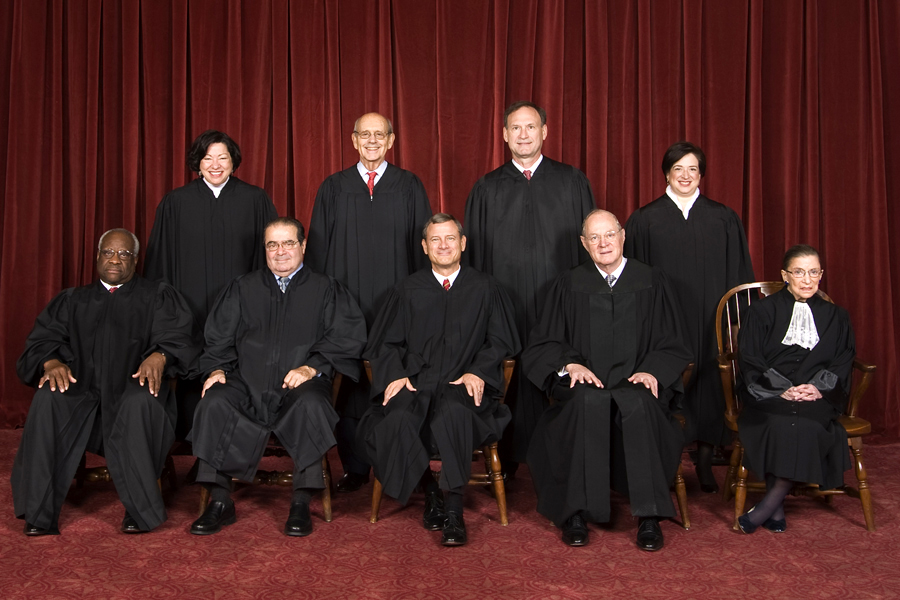
Supreme_Court_US_2010*Co-authored with Trey Dimsdale

In the highly anticipated decision of Burwell v. Hobby Lobby, the Supreme Court issued a victory to closely held for-profit corporations on the issue of religious liberty. While the decision was not as sweeping as some may have wanted—or as Justice Ginsburg claimed in her dissent—the Court’s decision upheld the idea that Americans need not check their right to religious liberty at the door when they enter the business world.

At issue for the Green family, owners of Hobby Lobby and Mardel, and the Hahn family, owners of Conestoga Wood Specialties, was the fact that the government compelled them to violate their deeply held religious beliefs by providing abortifacient birth control drugs and devices to their employees as part of their employer-provided healthcare plans. The Greens and Hahns specifically believe that life begins at conception and any measure that extinguishes the life of a human embryo is a violation of that belief. As such, the Health and Human Services birth control mandate would cause them to violate their consciences.

One of the key issues before the Court was whether or not for-profit corporations fit the legal definition of a person for the sake of exercising religious liberty. In the summary of their decision, the majority of the Court noted, “Protecting the free-exercise rights of closely held corporations thus protects the religious liberty of the humans who own and control them.”

In a further explanation of this protection, the Court noted the Third Circuit’s argument that for-profit corporations “do not pray, worship, observe sacraments or take other religiously-motivated actions separate and apart from the intention and direction of their individual actors.” In response to this conclusion, the Court stated, “All of this is true—but quite beside the point. Corporations, ‘separate and apart from’ the human beings who own, run, and are employed by them, cannot do anything at all.”

In making these statements, the Supreme Court tied the actions of closely held for-profit corporations directly to the actions and beliefs of their owners. Specifically, the Hahns and Greens can exercise their belief that life begins at conception through excluding certain types of birth control from their insurance plans.

The heart of this decision is in the Court’s determination that a corporation is a “person” under the meaning of the Religious Freedom and Restoration Act (RFRA). RFRA establishes a very specific test which federal courts must apply in cases that deal with government action that infringes on a person’s free exercise of religion. HHS argued, and at least one appellate court agreed, that corporations are not “persons” capable of exercising religion. In that case, the RFRA would not apply to the issue before the Court. The Supreme Court, however, held that (in at least the case of closely held corporations), corporations areentitled to the protections offered by RFRA. The fact that corporations are not capable of participating in religious activities is irrelevant. In short, the Supreme Court recognizes that Hobby Lobby, Mardel, and Conestoga Wood Specialties are legitimate vehicles for the exercise and expression of their owners’ religious convictions.

This is a clear victory for business owners who believe that life begins at conception and that the HHS mandate violates such a belief. In keeping with the First Amendment and RFRA, owners of closely held corporations can exclude abortifacient birth control measures from their healthcare plans.

A second issue presented in the Court’s decision is that the government cannot determine certain religious beliefs are invalid because they do not like them. The Court argues, “Arrogating the authority to provide a binding national answer to this religious and philosophical question [i.e., that providing these birth control measures enables the commission of an immoral act], HHS and the principal dissent in effect tell the plaintiffs that their beliefs are flawed. For good reason, we have repeatedly refused to take such a step.” Thus, HHS claimed it had the right to determine if the Greens and Hahns held a valid religious belief. The Court clearly held that is not the job of the government. The majority went on to say, “Similarly, in these cases, the Hahns and Greens and their companies sincerely believe that providing the insurance coverage demanded by the HHS regulations lies on the forbidden side of the line, and it is not for us to say that their religious beliefs are mistaken or insubstantial. Instead, our ‘narrow function . . . in this context is to determine’ whether the line drawn reflects ‘an honest conviction,’ . . . and there is no dispute that it does.”

If the government had its way, the Court argued that it could have excluded religious owners from the business world. According to the government’s argument, no insurance coverage mandate would have violated the RFRA, including third-trimester abortions and assisted suicide. The Court responded, “The owners of many closely held corporations could not in good conscience provide such coverage, and thus the HHS would effectively exclude these people from full participation in the economic life of the Nation.” Thankfully, the Court disagreed.

What does this mean for Christian business owners? Specifically related to the HHS mandate, owners of closely held corporations cannot be compelled to provide abortion-inducing drugs and devices as part of their healthcare plans. The Court’s decision in Burwell v. Hobby Lobby is only applicable to closely held corporations. These are businesses which are organized under state law as corporations but are owned by a small number of individual shareholders. The companies involved in this case are all closely held, family-owned businesses. This is different from publicly held corporations that may have any number of shareholders who have invested money in the business.

Many people in our churches are likely to be part of such businesses. While they may not always have the number of employees that require mandatory health insurance coverage, there is potential that their businesses could grow to that point just as Hobby Lobby, Mardel, and Conestoga Wood Specialties.

This case could also foreshadow how the Court may decide other related cases, such as the cases involving the Little Sisters of the Poor and religious educational institutions. Subsequent Supreme Court decisions could extend similar religious freedom protections and exemptions to other types of organizations that Burwell v. Hobby Lobby does not.

We can rejoice in today’s victory for the Greens and Hahns, but there is still much work to be done in protecting religious liberty for people of faith in the marketplace.

_________________________

Trey Dimsdale, J.D., serves as Research Fellow in Law and Public Policy for the Land Center for Cultural Engagement at Southwestern Baptist Theological Seminary in Fort Worth, Texas. He is also one of my Ph.D. students in ethics.

Can a Christian Be Gay?: The New Question in Evangelicalism

There is a new book making waves in evangelicalism with its release today. God and the Gay Christian: The Biblical Case in Support of Same-Sex Relationships by Matthew Vines sets out to change 2,000 years of church history (and thousands more of Jewish history) regarding Scriptural teaching on homosexuality.

The promotional material for the book claims that it provides a way to interpret key biblical texts related to homosexuality that “honors those who are different and the authority of Scripture.” The unique feature of this book is that Vines claims to hold that Scripture is authoritative on this issue. He writes, “Like most theologically conservative Christians, I hold what is often called a ‘high view’ of the Bible. That means I believe all of Scripture is inspired by God and authoritative for my life. While some parts of the Bible address cultural norms that do not directly apply to modern societies, all of Scripture is ‘useful for teaching, for reproof, for correction, and for training in righteousness’ (2 Timothy 3:16–17, NRSV)” (p. 2).

Vines first reached popularity when the video of his teaching in a church went viral. From that point forward, he has been the “go-to man” for affirming homosexuality within the text of Scripture.

As others have noted, Vines has not actually presented any new arguments for interpreting Scripture in support of homosexuality. Most of his arguments come from well-established books on this issue by John Boswell, Robin Scroggs, and others. The difference, however, is that he claims to believe the inspiration and authority of Scripture—unlike previous authors.

In contrast to what Vines claims, this book has the potential to do great damage to people’s faith in the authority and veracity of Scripture. Vines applies a cultural hermeneutic to the text of the Bible, interpreting God’s Word through the lens of the gay rights movement. In addition, he elevates personal experience—specifically his own story—to a place of authority over the text. If Scripture and experience come into tension, he believes that experience must win out.

I have interacted with Vines’ work before in a series of articles that can be found here. While I believe that Vines is wrong on the interpretation of Scripture, we cannot simply ignore his work. He stands to be a major voice for people who want to remove the tension between Scripture and homosexuality.

At the end of the day, however, I am always drawn back to what Paul says in 1 Corinthians 6:9–11. He writes, “Or do you not know that the unrighteous will not inherit the kingdom of God? Do not be deceived; neither fornicators, nor idolaters, nor adulterers, nor effeminate, nor homosexuals, nor thieves, nor the covetous, nor drunkards, nor revilers, nor swindlers, will inherit the kingdom of God. Such were some of you; but you were washed, but you were sanctified, but you were justified in the name of the Lord Jesus Christ and in the Spirit of our God.”

I deal with the terms “effeminate” and “homosexuals” in other articles, but I want to note what Paul says at the end of this passage. After listing a number of sins that are condemned in Scripture, he states, “Such were some of you. . . .” We see here that members of the church in Corinth were former fornicators, former idolaters, former adulterers, former homosexuals, etc. The reason they are no longer these things is that they were washed, sanctified, and justified “in the name of the Lord Jesus Christ and in the Spirit of our God.” These are no longer the behaviors of people who claim to be Christians. This is not where they find their identity anymore. The power of Christ can overcome these sins—including homosexuality.

Below are resources from me responding to Matthew Vines’ views on homosexuality and the Bible.

Is Being Alone a Sin?: Answering Matthew Vines Part 1

Are Homosexual Relationships “Unnatural”?: Answering Matthew Vines Part 2

Does the Denial of Same-Sex Marriage Inflict Undue Pain?: Answering Matthew Vines Part 3

What Did Jesus Teach about Homosexuality?: Answering Matthew Vines Part 4

Lillian Kwon, “Theologians Find Vines’ ‘Homosexuality Is Not a Sin’ Thesis Not Persuasive,” The Christian Post, September 28, 2012. (Quoted throughout article)

Abortion and Self-Ownership

Where does the right of self-ownership come from? Is the pro-abortion argument that a woman can do whatever she wishes with her body actually grounded in any theological or philosophical ideas? How does argument relate to the supposed right to abortion in the United States?

Canon & Culture, a project of the Ethics & Religious Liberty Commission, published a piece I wrote on the issue of abortion and self-ownership. Here is an excerpt:

Last July I boarded a bus and drove down to Austin for a pro-life rally on the steps of the Texas State Capitol. We arrived more than an hour before the scheduled start time of the rally, so I had the opportunity to take in my surroundings and observe the arguments being made by the abortion-rights protestors. In what was often crass language, the abortion-rights argument being made at the Capitol that day essentially boiled down to one point—a woman has the right to do what she wants with her own body. This can be described as a right to privacy based upon self-ownership.

Since this right is not explicitly spelled out in the Constitution, where does it find its origin? In contemporary jurisprudence, the right to do what you want with your own body (i.e., the right to privacy) is drawn from the “penumbras” and “emanations” of the Bill of Rights according to Griswold v. Connecticut and out of the 14th Amendment’s restriction on the state from depriving “any person of life, liberty, or property, without due process of law.” Applied to the abortion issue, these ideas regarding the right to privacy form the foundation of the Roe v. Wade decision that opened the door for abortion on demand. However, the supposed “right to privacy” found in the Bill of Rights and the 14th Amendment still does not make self-ownership clear.

Even though most abortion-rights proponents do not make the explicit connection, the right of self-ownership is typically attributed to the work of John Locke in The Second Treatise of Government. Locke writes, “Though the earth and all inferior creatures be common to all men, yet every man has property in his own person. This nobody has any right to but himself” (V.27). There is no doubt that John Locke’s work was very influential upon the Founders of the United States, and language from the Second Treatise appears directly in the Declaration of Independence and the Constitution. However, are we correct in inferring a right to self-ownership of our bodies from Locke?

You can read the rest of the article here.

*You may notice that this article is a little more academic than what I usually post on my website, but that is the purpose of Canon & Culture. Their purpose is “to help build and strengthen the church’s social, ethical, and moral witness by providing thoughtful content from leading thinkers that inspires a rising generation of evangelicals to think Christianly about the public square and the common good.”