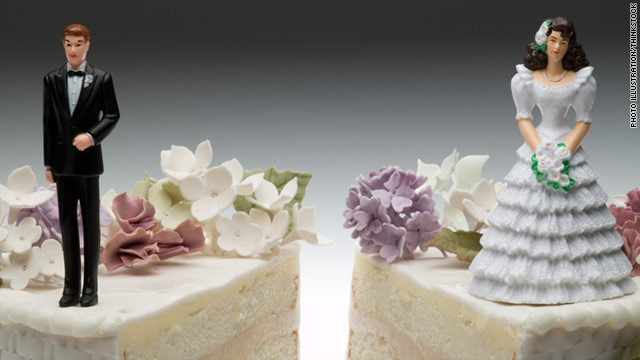
Divorce in the Bible Belt

Data from the 2010 Census has been flowing steadily for the last few months. Much of it has been the typical stuff—total population, redistricting issues resulting from population shifts, etc. Some of it is encouraging, but some not so much. CNN.com ran a story on a report released yesterday by the U.S. Census Bureau about marriage and divorce statistics, and the numbers are ugly. Here are a few snippets:

While the Bible Belt is known for its devotion to traditional values, Southerners don’t do so well on one key family value: They are more likely to get divorced than people living in the Northeast.

Southern men and women had higher rates of divorce in 2009 than their counterparts in other parts of the country: 10.2 per 1,000 for men and 11.1 per 1,000 for women, according to a new report from the U.S. Census Bureau released Thursday.

By comparison, men and women in the Northeast had the lowest rates of divorce, 7.2 and 7.5 per 1,000, which is also lower than the national divorce rate of 9.2 for men and 9.7 for women.

For those of us who call the Bible Belt home and think all things Southern are superior (food, culture, people—can I get an “Amen”?!), these statistics probably seem shocking. In fact, I did not believe them, so I set out to disprove them. Unfortunately, they seem to be fairly accurate.

Of course, statistics can say what the researcher (or reporter) wants them to say, and there are a couple of key factors buried in these statistics that are glossed over in the article. First, Southerners marry at a much higher rate than those in the Northeast. When you have more people marrying, then you have more opportunity for divorce. Second, the South is not the overtly religious region it used to be. Places like Texas, Florida, and Tennessee have become the homes of transplants from other parts of the country that often do not share the “steeped-in-religiosity” tradition of the South. These people have come for the weather, jobs, or tax benefits, but they are not Southerners by birth (or as the bumper sticker reads: “American by birth, Southern by the grace of God!”). In fact, native-born Southerners often no longer hold the values their parents or grandparents did.

The other difficult part of reading these statistics as gospel truth is that they merely report a snapshot in time. They give the total number of divorces that occurred in 2009 per every 1,000 adults (age 15 and older) in the population at that time. What is not told in the initial numbers is how long those marriages lasted before divorce and the prospects of durability for new marriages in 2009 and forward. If you dig deeper into the Census Bureau report (and not reported in the news article), you see that the duration of current marriages for women in their first marriages is much higher across the South and Midwest than in the Northeast. Therefore, Southerners stay married longer despite the fact that they divorce at a higher rate.

So what does this say about the Bible Belt? First, I believe it demonstrates religion is oftentimes more of a cultural expectation than a personal conviction. While Southerners claim to be religious, it does not always translate into how they live their lives—especially their marriages. Second, we see that marriage is in a precarious state everywhere—not just the “liberal” Northeast and West Coast. While marriage is more of a social norm in the South, it does not make it any easier to have a good marriage that lasts. Finally, the churches in the Bible Belt must not rest on their laurels of cultural significance to influence marriage. Instead, the churches need to fight to protect the marriages of the people in their congregations. Marriage is a picture of the relationship between Christ and the church (Eph 5:22–33). How can we clearly communicate the love Christ has for the church if our marriages are falling apart?

_________________________

Katia Hetter, “What’s Fueling Bible Belt divorces,” CNN.com, August 25, 2011.

Diana B. Elliott and Tavia Simmons, “Marital Events of Americans: 2009,” United States Census Bureau, August 2011.


Image credit.

Are Children a Burden or a Blessing?

Earlier this summer, I picked up an old copy of Life magazine while on vacation. The cover picture and title caught my eye. There was a picture of a small baby (no older than a few months), and below the picture, the cover read, “The Baby Riddle: What will happen to American life if each family has one child? Or two? Or three?” The magazine was dated May 19, 1972.

After my wife gave birth to our fourth child two weeks ago, I decided to take out the magazine and read through some of the articles. Here are a few of the highlights—remember that it was written nearly 40 years ago. Addressing the “problem” of continued population growth, the author writes:

Both the Pill and easier abortion laws have helped lower the birthrate in recent years. So have inflation, job shortages and the women’s rights movement, all of which tend to encourage later marriages and fewer children. Last month, after an exhaustive two-year study, the presidential Commission on Population Growth and the American Future recommended that we now seize the chance to stabilize our population. The commission, headed by John D. Rockefeller III, favors abortion on request, free contraceptive information and supplies for all, including minors, and a national policy of zero population growth. Married couples would be encouraged to have an average of only two children (the present average is 2.3).

Back in 1972, many sociologists were sounding the alarm about a population bomb that would threaten food production, infrastructure, and the American dream. The magazine article proposed that if American families had three children, the population would balloon to 322 million by the year 2000 (current population of the US is over 312 million based on the population clock from the US Census Bureau), half the country would be short of water, food costs would increase by 40–50%, and 93% of all students would receive a worse education in 2000 than they could have received in 1972. These crises would all be the result of a population explosion.

But wait, there’s more:

Besides these direct measures [free contraceptive services, liberalized abortion laws, and state-subsidized sterilization], the commission noted with disapproval the large number of social and psychological pressures in our society that encourage too many people to get married and, once married, to have children.

Here we see a government commission disapproves of social pressures to get married and once married, for couples to have children. Well, I guess in some respects, they have gotten their wish. According to a report from the National Center for Health Statistics (a division of the Centers for Disease Control and Prevention), “nearly 4 in 10 U.S. births were to unmarried women in 2007.” In addition, the report states, “Most births to teenagers (86% in 2007) are nonmarital, but 60% of births to women 20–24 and nearly one-third of births to women 25–29 were nonmarital in 2007.” Social pressures for marriage have subsided, but women are still giving birth. The difference is that 40% of all births are now to single women, meaning that children are being reared in single-parent households at an alarming rate.

Some may see this trend as a positive example of the feminist movement. However, Maggie Gallagher suggests that marriage is important for the well-being of children. Among other conclusions, she reports, “Marriage reduces child poverty. Children in intact married homes are healthier, on average, than children in other family forms. Babies born to married parents have sharply lower rates of infant mortality. Boys and young men from intact married homes are less likely to commit crimes. Children raised outside of intact marriages are more likely to be victims of both sexual and physical child abuse.”

Finally, the article cites a then-forthcoming book by Shirley Radl bemoaning the fact that she ever had children. Here are some of her thoughts:

When I was pregnant the first time, we celebrated our eighth wedding anniversary. My husband gave me an exquisite pearl bracelet. Six years later I was picking up the pearls in my vacuum cleaner. My son had destroyed it. It is a sad symbol of how two children affected a once-beautiful relationship.

Bearing children is a gamble with lives of innocents. The greatest failure is to have children and learn too late you’re not equipped for that career. We who learned the truth must level with an unsuspecting generation of potential mothers. They must look beyond the myths, seek the truth, judge their capacities accordingly. Plan carefully: the life you save may be your own.

The overwhelming thrust of the articles in this 40-year-old edition of Life is that children are a burden. The act of having children must be weighed like a financial decision—do I invest in myself or in children? The focus is on personal rights, dreams, aspirations. If children get in the way of those things, then they must be a burden. Is that how Scripture describes children? Absolutely not!

In Psalm 127:3–5, Solomon writes:

Behold, children are a gift of the LORD,
The fruit of the womb is a reward.
Like arrows in the hand of a warrior,
So are the children of one’s youth.
How blessed is the man whose quiver is full of them;
They will not be ashamed
When they speak with their enemies in the gate.

The biblical perspective is that children are a gift, a blessing, a reward. Do children place a burden on the lives of adults? Yes. I will not deny that there are things we cannot do because we have four children. Do the rewards of four precious lives outweigh the burdens? No doubt about it! We need to maintain a biblical perspective on children and the blessing of having them in our lives.

_________________________

“The Crucial Math of Motherhood,” Life, May 19, 1972.

U.S. Census Bureau, “U.S. POPClock Projection.”

National Center for Health Statistics, “Changing Patterns of Nonmarital Childbearing in the United States,” May 2009.

Maggie Gallagher, “(How) Does Marriage Protect Child Well-Being?,” in The Meaning of Marriage: Family, State, Market, & Morals (eds. Robert P. George and Jean Bethke Elshtain; Dallas: Spence, 2006), 197–212.

Shirley Rogers Radl, Mother’s Day Is Over (Arbor House, 1987).

The Tragedy of Pregnancy Reduction

As I write this post, I am waiting to get the phone call from my wife saying we need to head to the hospital for the birth of our fourth child. The last forty weeks have passed amazingly fast and painfully slow at the same time. In the midst of what will most likely be the longest streak of 100+ degree days on record in Fort Worth, we await the arrival of our precious daughter. Some people think we are crazy for having four children. When they find out our oldest is only 6, it confirms it in their minds.

In contrast to our anticipation of our child’s birth, the New York Times ran a story this week on the increasing phenomenon of pregnancy reduction—specifically the reduction of twins to a singleton. The article is heartbreaking and painful at times to read. The article opens with the following story:

As Jenny lay on the obstetrician’s examination table, she was grateful that the ultrasound tech had turned off the overhead screen. She didn’t want to see the two shadows floating inside her. Since making her decision, she had tried hard not to think about them, though she could often think of little else. She was 45 and pregnant after six years of fertility bills, ovulation injections, donor eggs and disappointment—and yet here she was, 14 weeks into her pregnancy, choosing to extinguish one of two healthy fetuses, almost as if having half an abortion. As the doctor inserted the needle into Jenny’s abdomen, aiming at one of the fetuses, Jenny tried not to flinch, caught between intense relief and intense guilt.

“Things would have been different if we were 15 years younger or if we hadn’t had children already or if we were more financially secure,” she said later. “If I had conceived these twins naturally, I wouldn’t have reduced this pregnancy, because you feel like if there’s a natural order, then you don’t want to disturb it. But we created this child in such an artificial manner—in a test tube, choosing an egg donor, having the embryo placed in me—and somehow, making a decision about how many to carry seemed to be just another choice. The pregnancy was all so consumerish to begin with, and this became yet another thing we could control.”

Jenny’s last sentence tells it all. She said, “The pregnancy was all so consumerish.” If she could choose to get pregnant in the first place through donor-based IVF, why couldn’t she simply choose that she only wanted one of the babies?

The language found throughout the article relates to choices and desires. The story about Jenny continues:

The idea of managing two infants at this point in her life terrified her. She and her husband already had grade-school-age children, and she took pride in being a good mother. She felt that twins would soak up everything she had to give, leaving nothing for her older children. Even the twins would be robbed, because, at best, she could give each one only half of her attention and, she feared, only half of her love.

Dr. Richard Berkowitz, a perinatologist at Columbia University Medical Center, asks, “In a society where women can terminate a single pregnancy for any reason—financial, social, emotional—if we have a way to reduce a twin pregnancy with very little risk, isn’t it legitimate to offer that service to women with twins who want to reduce to a singleton?” His question sums up the whole debate from a secular perspective. If our society has already opened the door for abortion-on-demand with no concern for reason, then there is nothing standing in the way of pregnancy reduction except social mores.

Despite the logic of the argument, society is still uneasy with certain forms of pregnancy reduction. Reducing twins to a single birth receives the least amount of public support. An interesting facet of this discussion is that the option of pregnancy reduction was not even possible a few decades ago. Most proponents proclaim it as a victory for women’s choice, but Josephine Johnston, a bioethicist at the Hastings Center, sees it differently:

In an environment where you can have so many choices, you own the outcome in a way that you wouldn’t have, had the choices not existed. If reduction didn’t exist, women wouldn’t worry that by not reducing, they’re at fault for making life more difficult for their existing kids. In an odd way, having more choices actually places a much greater burden on women, because we become the creators of our circumstance, whereas, before, we were the recipients of them. I’m not saying we should have less choices; I’m saying choices are not always as liberating and empowering as we hope they will be.

The culture of death that views abortion and pregnancy reduction as socially acceptable has gripped our American culture. This article, however, exposes the unease with which our culture has accepted these horrendous practices. It reminds me of Romans 2:14–16 where Paul writes, “For when Gentiles who do not have the Law do instinctively the things of the Law, these, not having the Law, are a law to themselves, in that they show the work of the Law written in their hearts, their conscience bearing witness and their thoughts alternately accusing or else defending them, on the day when, according to my gospel, God will judge the secrets of men through Christ Jesus.” Their consciences are bearing witness against their actions because they know that what they are doing is wrong. The guilt is a result of God’s general revelation to mankind testifying that such pregnancy reductions are sinful.

I pray that we would stop seeing these precious lives in the womb as fetuses and see them as God sees them—humans made in the image of God. In Psalm 139:13–16, David proclaims:

For You formed my inward parts;
You wove me in my mother’s womb.
I will give thanks to You, for I am fearfully and wonderfully made;
Wonderful are Your works,
And my soul knows it very well.
My frame was not hidden from You,
When I was made in secret,
And skillfully wrought in the depths of the earth;
Your eyes have seen my unformed substance;
And in Your book were all written
The days that were ordained for me,
When as yet there was not one of them.

_________________________

Ruth Padawer, “The Two-Minus-One Pregnancy,” The New York Times, August 10, 2011.

Should a Pastor Perform a Wedding for Unbelievers?

About six months ago, one of my students was actively pursuing a ministry position after graduating from seminary. During his search, a friend sent him a link to a new “ministry” that provided ministerial wedding services indiscriminately to anyone willing to pay the fee. They had a slick website and a pledge to “make your wedding personal” despite never meeting the minister until a few weeks before the nuptials. For me, this raised the question of whether or not a pastor should perform weddings with little or no concern for the spiritual lives of the couple.

For most ministers I know, the question of performing a wedding ceremony between a believer and an unbeliever is a non-starter. We quickly jump to 1 Cor 7:39 and 2 Cor 6:14–15. These verses make it clear that believers are instructed not to marry unbelievers. However, there are no biblical instructions regarding two unbelievers marrying. In fact, the assumption is that if believers are only marrying other believers, then unbelievers will be marrying unbelievers. That leaves us with the question of whether or not a Christian pastor should perform the wedding ceremony for two unbelievers.

Before we can answer that question, we first need to address the nature of marriage. While there are some (e.g., Catholics) who argue that marriage is a church ordinance (or sacrament), we must acknowledge that marriage was instituted prior to the church (Gen 2). There are also those who argue that marriage is a state ordinance (e.g., most secularists). However, there was no government in the Garden of Eden either. Instead, marriage is a creation ordinance given to all mankind as a gift. Russell Moore writes, “Marriage though, unlike baptism and the Lord’s table, is a creation ordinance, given to all people (Gen 2:23-24). It is good for unbelievers to marry rather than to live in immorality. It’s good for them, for their children, and for society as a whole.” There are a host of benefits to society that come from marriage—economic development from family-owned businesses, social stability through the family unit, and care for the young by parents.

If marriage is a creation ordinance and it is good for unbelievers to marry one another, then should a pastor perform a wedding between two unbelievers? My answer to that question is a resounding “No.” Let me explain.

First, a pastor is not a “lone ranger” exercising his ecclesiastical duties apart from the authority of the local church. When a pastor performs a wedding ceremony, he is placing his stamp of approval (and that of the church) on the marriage relationship. However, the church has no business giving its blessing to a marriage between unbelievers because there is no mechanism to hold them accountable. Moore states, “For unbelievers the church has no right to hold a couple to their vows through church discipline. They are not, after all, members of the church. A church that isn’t able to hold a couple to their vows (through discipleship and discipline) as witnesses to the covenant made (through discipleship and discipline) has no right to solemnize these vows in the first place. What would the church do if the unbelieving non-members were to break these vows?”

Second, Christian marriage is a depiction of the relationship between Christ and the church (Eph 5:22–33). A pastor’s intention in performing a ceremony should be to direct the couple and those witnessing the ceremony to understand that biblical picture. However, a marriage between two unbelievers lacks the key element to make that picture complete—a relationship with Christ. Without that relationship, a husband and wife have no desire to honor God with their marriage. Thus, the pastor should have no interest in blessing a marriage that sets out from the beginning with no intention to recognize God’s design for marriage.

Third, while proclaiming the gospel is appropriate (and necessary in my view) during a wedding ceremony, it should not be the goal of a ceremony to proclaim the gospel to the bride and groom. The best gospel proclamation in a wedding is the living testimony of the couple as they depict the Christ-church relationship. The pastor puts Scripture and words to that picture to explain it. Moore aptly describes the faulty view of performing weddings as evangelism:

Almost every pastor I’ve ever heard who performs weddings indiscriminately appeals to the evangelistic potential. Every community has the “wedding chaplain” pastor who will marry anyone. He is rarely the soul-winning firebrand of the community. As a matter of fact (though I’m sure there are exceptions), I’ve not once met an unbelieving couple who were won to Christ by a pastor who was willing to marry them regardless of their belief in Christ. I know of several couples, though, who came to Christ because a faithful pastor lovingly told them no, and told them why.

I believe that many pastors who perform such ceremonies are more concerned with not offending others than they are with seeing God’s design for marriage upheld. If two unbelievers want to get married, send them to a justice of the peace or someone else authorized to sanction a marriage. Moore concludes his admonition to ministers with the following:

For many young ministers, this question comes right down to a question of courage. If you’re not able, at the beginning of your ministry, to turn down family members and friends who expect you to act as a wedding chaplain for them, then how are you going to turn down unbelievers who want to [be] baptized? How are you going to defy the armies of antichrist, should it come to that? The gospel minister is made of sterner stuff than what many of us are accustomed to seeing. Refusing to place your ecclesial imprimatur on a Christless marriage is among the least dangerous things a minister will ever be called to do.

I agree with Russell Moore on this one. Let’s avoid performing such marriages, even when it is family members who ask. Placing our “blessing” on a marriage should be reserved for those marriages that will reflect the true nature of marriage and depict the Christ-church relationship. In fact, I would say there are even times when we should say “no” to believers who have the wrong intentions for marriage.

_________________________

Russell Moore, “Should a Minister Officiate at the Weddings of Unbelievers,” September 11, 2008. Moore’s article from three years ago helped to solidify my position on this question. I am greatly indebted to him for his brief, yet substantive thoughts on the issue.

Should a Pastor Perform a Wedding for a Cohabiting Couple?

There is a growing trend in contemporary American society related to living together before getting married. According to the 2010 census data from the US Census Bureau, there were 7.529 million opposite sex unmarried couple households.[1] The National Marriage Project based at the University of Virginia notes:

Between 1960 and 2009, the number of cohabiting couples in the United States increased more than fifteenfold. About a quarter of unmarried women age 25 to 39 are currently living with a partner, and an additional quarter have lived with a partner at some time in the past. More than 60 percent of first marriages are now preceded by living together, compared to virtually none 50 years ago. For many, cohabitation is a prelude to marriage. For others, it is simply better than living alone. For a small but growing number, it is considered an alternative to marriage.[2]

As a seminary professor who teaches a class on marriage and family, I try to prepare my students for that time in their ministry when someone asks them to perform a wedding ceremony. There are a number of questions we need to ask ourselves before agreeing to be a part of the ceremony. In fact, LifeWay Research released the results of a recent survey they performed on just this issue. The summary article can be found at Baptist Press and LifeWay’s Facts and Trends Online. The results are interesting and a little frightening.

The lead stat for the article relates to cohabitation before marriage. The study notes:

The survey of 1,000 randomly selected Protestant pastors found that a majority (58 percent) will perform weddings for couples they know are living together. Nearly a third (31 percent) will not, and 10 percent are not sure.

When it comes to cohabitating couples, pastors who consider themselves mainline are more likely to perform weddings then those who consider themselves evangelical.

In response to the question, “When asked to do so, will you perform a marriage ceremony for a couple whom you know is living together?” 68 percent of mainline pastors say yes compared with 57 percent of evangelicals. Twenty-four percent of mainline pastors and 34 percent of evangelicals say no.

A minister’s level of education also reveals differences in pastors’ willingness to perform marriage ceremonies for couples who are living together.

A full 62 percent of pastors with at least a master’s degree will marry cohabitating couples while only 52 percent of those with a bachelor’s degree or less will perform weddings for couples living together before marriage. Twenty-nine percent of pastors with at least a master’s degree will not perform such ceremonies compared with 36 percent of those with a bachelor’s degree or less.

To me, this statistic about the willingness of pastors to perform weddings for couples they know to be cohabiting is disturbing. If we set aside the biblical material that relates to cohabitation and just look at the sociological data, pastors should be reticent to perform such marriages.

The National Marriage Project notes that cohabitation is more common among those of lower educational levels, lower income levels, the less religious, “those who have been divorced, and those who have experienced parental divorce, fatherlessness, or high levels of marital discord during childhood.”[3] After noting all these demographic details, National Marriage Project states:

The belief that living together before marriage is a useful way “to find out whether you really get along,” and thus avoid a bad marriage and an eventual divorce, is now widespread among young people. But the available data on the effects of cohabitation fail to confirm this belief. In fact, a substantial body of evidence indicates that those who live together before marriage are more likely to break up after marriage.[4]

Even though the authors acknowledge that the evidence is somewhat controversial, Wilcox concludes, “What can be said for certain is that no research from the United States has yet been found that those who cohabit before marriage have stronger marriages than those who do not.”[5]

So why would a pastor perform a marriage for a cohabiting couple when the sociological evidence says that such couple are more likely to get divorced? I think the answer is societal pressure and a desire not to offend. Certainly Scripture is clear in its condemnation of fornication (a KJV-style word for a pre-marital sexual relationship). Fornication and fornicators (as well as adulterers) are described as evil, subject to judgment, and not heirs of the kingdom of God (Matt 15:19; Acts 15:20, 29; 1 Cor 6:9; Heb 13:4).

What should one do when encountering this situation? Here are a few suggestions. First, remember that cohabitation is not the unpardonable sin. After Paul gives a vice list in 1 Cor 6:9–10 that says certain people, including fornicators and adulterers, will not inherit the kingdom of God, he states, “Such were some of you; but you were washed, but you were sanctified, but you were justified in the name of the Lord Jesus Christ and in the Spirit of our God” (1 Cor 6:11). We need to work with these couples to help them confess and repent of this sin. Ideally, this confession and repentance should have a public element to it within the church. This does not necessarily mean that they air their dirty laundry before the church on Sunday morning, but it should at least include their families and those in their circle of influence who are aware of the situation. Depending on the church, it may also include the entire church body.

Second, I believe separation from the cohabiting relationship is in order prior to marriage. This involves all aspects of the relationship. If it means a woman moves back home with her parents, or a man moves in with some friends for a period of a few months, then so be it. If the couple is not willing to do this for the remainder of the time leading up to the marriage, then they are not interested in honoring God with their marriage.

Third, assuming that the couple has cooperated in the first two points, I believe the pastor must still examine his own convictions about marriage to determine whether or not he desires to place his “stamp of approval” on the wedding by performing the ceremony.

I believe our culture has become too focused on the wedding ceremony, and some pastors are fearful that they might alienate an influential family in the church if they do not fulfill the daughter’s wish for a “dream wedding.” Marriage is much more than a ceremony. It is a lifetime covenant established by God (Gen 2:22–24). It is time we focus on the marriage and not the ceremony, but the decision to perform the wedding is part of that process.


[1] U.S. Census Bureau, “America’s Families and Living Arrangements: 2010,” Table UC3. http://www.census.gov/population/www/socdemo/hh-fam/cps2010.html. These couples self-identified as unmarried partners.

[2] W. Bradford Wilcox, ed., “When Marriage Disappears: The New Middle America,” The State of Our Unions: Marriage in America 2010, 76.  http://www.virginia.edu/marriageproject/pdfs/Union_11_12_10.pdf.

[3] Ibid.

[4] Ibid., 76–77.

[5] Ibid., 77.