Samuel Gregg on Supreme Court Decision

Samuel Gregg, Director of Research for the Acton Institute, offered a succinct assessment of what conservatives need to do next to win the debate about healthcare in light of the recent Supreme Court decision. Here is an excerpt:

However, it’s also plain that conservatives, beyond citing the raw economics of real health-care reform, must ballast their case against socialized medicine with moral and cultural arguments. Far too many conservatives and free marketers critique socialized medicine almost solely in terms of efficiency and effectiveness. Economic analyses and arguments are important, but not many people will put everything on the line for a calculus of utility. Instead, critics must draw attention to the ways in which socialized medicine (1) saps personal responsibility, (2) facilitates the spoiled-brat entitlement mentality presently reducing much of Europe to an economic laughingstock, and (not least among such concerns) (3) creates an impossible situation for those of us who on grounds of faith and reason cannot and will not participate in schemes that legally require us to cooperate in other people’s choices for moral evil.

We can win numerous economic arguments. In some respects, that’s actually the easy part. But until we decisively shift — and win — the moral debate, the battle will be uphill all the way.

I met Samuel Gregg during my recent trip to Acton University. He is a top-notch scholar and offers clear explanations on the issues of the day. Take a few minutes and read his commentary here. You can also visit the Acton Institute online at www.acton.org for more resources.
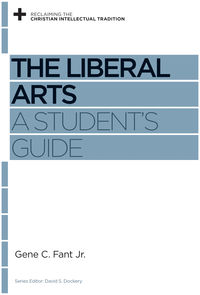
Book Review: The Liberal Arts A Student’s Guide

Gene C. Fant, Jr., The Liberal Arts: A Student’s Guide (Wheaton: Crossway, 2012), 121 pages; $11.99.

In his new book, Gene Fant makes the case that a liberal arts education can play a significant part in shaping the Christian community for both the marketplace and the mission field. In an age when many people are moving away from liberal arts to specialization in education, Fant seeks to recover the importance of the liberal arts. He states:

An emphasis on liberal learning is of critical importance to our era, as we seek to engage our culture with the great Christian intellectual tradition that continues to provide a fertile culture for thought and action.

Perhaps the most significant contribution of the book comes when Fant demonstrates the connection between faith and several of the core disciplines of a liberal arts education. He connects mathematics, science, literature, and aesthetics to their theological foundations and demonstrates how each provide a link to God through general revelation.

Fant also makes some predictions regarding the nature of education in the future particularly as it relates to the traditional church-related vocational enterprises. He predicts:

Fewer “career” missionaries with theological degrees from seminaries will be commissioned by denominational agencies; rather engineers and chemists will take positions with corporations that will position them in regions where there is little gospel platform. Full-time church employees who supervise inner-city ministries will become rarer; instead, teachers and social workers will target urban areas as places to build careers so that they may serve populations with particular challenges that may be remediated by the gospel. Business leaders and entrepreneurs will find ways to generate profits in ways that reflect their Christian principles and will fund philanthropic activities through these funds. Church planters will target unreached areas, armed with both theological education and practical platforms, where they will run coffee shops, manage arts agencies, and coach athletics while building relationships that may lead to spiritual transformations in the context of local church fellowships. A liberal arts education will be critical to developing skill sets necessary for success in these kinds of ventures.

Crucial to the success of these “new ventures” will be the integration of theology into the various disciplines of the liberal arts curriculum.

Fant’s ideas and conclusions are worth your time to read. He offers plenty of material to think about related to the current state and future of the liberal arts education. Take some time, pick up the book, and read what he has to say.

New Book from Gene Fant: The Liberal Arts A Student’s Guide

I just got a new book in the mail today, and I am looking forward to reading it. The Liberal Arts: A Student’s Guide by Gene C. Fant Jr. just came out from Crossway. Gene Fant was my British Literature professor at Mississippi College and has continued to have a huge influence on my life as a friend and mentor. He currently teaches literature and serves as VP for Academic Administration at Union University in Jackson, TN. I hope to give some thoughts on the book when I have an opportunity to read it. The book is available on Amazon and other retailers.

Good Reading: The Perils of Polygamy

Christopher Kaczor has an interesting article on The Public Discourse entitled “The Perils of Polygamy.” He breaks down the problems with polygamous societies and examines the difficulties that accepting various forms of polygamy can create for families, children, and civil society. Here is an excerpt:

In a polygamous marriage, the man does not give himself qua husband entirely to his wife. A polygamous husband gives himself qua husband to however many wives he has. Wives, by contrast, are expected to reserve themselves in a sexual way for their husband alone. Moreover, wives face inequality among themselves as “senior wives” enjoy rank above “junior wives.” The polygamous relationship can never attain the mutual and complete self-donation of spouses in monogamous marriage because it is intrinsically impossible to reserve oneself in a sexual way entirely for one person and at the same time reserve oneself in a sexual way entirely for a different person (or persons). Marriage understood as a comprehensive union can exist only between two persons, and never more than two persons. Society, therefore, has good reason not simply to proscribe polygamy, but to endorse monogamy.

The discussion surrounding the political/legal definition of marriage going on in our society today has mostly focused on same-sex marriage. However, the debate has also opened the question of polygamous marriage. Kaczor has exposed many of the problems with polygamous marriage and why society should not go down that path even though nearly 85% of all societies in history have practiced polygamy. Take some time to read the article–it is worth your time.

_________________________

Christopher Kaczor, “The Perils of Polygamy,” The Public Discourse, May 21, 2012.

Minorities Represent Majority of Births

A press release from the Census Bureau today reveals that 50.4% of the nation’s population under the age of 1 were minorities. This data represents the 12-month period ending July 1, 2011. The new number represents a slight increase from the 2010 Census, which showed 49.5% minority. Therefore, of the children born July 2010–June 2011, the majority of them were non-white.

While this statistic will probably get the most headlines, some other interesting facts are also revealed in the press release. The median age of the nation also increased to 37.3 years. The size of the over-65 population increased to 41.4 million while the under-18 population dropped about 200,000 to 74 million.

There is no doubt that the demographic shape of the American population is changing. The population is becoming more diverse with the overall percentage of minorities now at 36.6%. Hispanics make up almost half of the minority population at 52 million, over 8 million more than the next largest minority, African-Americans.

The population is also becoming older. In some respects, this is the result of longer life expectancy than in years past. In addition, the birthrate continues to decrease among most groups.

There will be real challenges facing American society in years to come, but there are also great opportunities. Education, language, and social services will be some of the difficulties in adjusting to the demographic changes. However, there is reason to rejoice as we see greater diversity in our society because we see the work of God in creating beautifully different people.

For the church, there are also great challenges and opportunities. The church remains a very segregated place on the whole, and we need to figure out how to address that. Eternity will not be spent worshiping our King in ethnic groupings. Instead, our churches need to work diligently to reach people of every ethnicity, many of whom live in our own communities.

The church will also need to address its own aging population. The New Testament church had people from every age demographic. I cringe when I see churches that specifically want to reach only a specified age segment. How are the younger ones to learn wisdom from their elders? How are the younger to serve the elderly who can no longer serve themselves?

I pray we as the church can be diverse in both ethnicity and age, but in many respects we have a lot of work to do.

_________________________

United States Census Bureau, “Most Children Younger Than Age 1 are Minorities, Census Bureau Reports,” May 17, 2012.