Face-Washing or Whitewashed Tombs?

The Chinese government appears to be getting a little more politically correct in the enforcement of one of its most notorious policies—the one-child policy. According to the Shanghai Daily, the National Population and Family Planning Commission has initiated a new program called the “Face-Washing Project.” In an attempt to enforce this policy, apparently some local officials have threatened violators with forced sterilization, arrest, and even death.

The newspaper reports:

Some local officials in rural areas have come up with nasty slogans to intimidate couples planning to have more than one child. Simply reading some of them can send chills down one’s spine.

Some examples: “If you don’t receive the tubal ligation surgery by the deadline, your house will be demolished!” “We would rather scrape your womb than allow you to have a second child!” “Kill all your family members if you don’t follow the rule!”

“Once you get captured, an immediate tubal ligation will be done; Should you escape, we’ll hunt you down; If you attempt a suicide, we’ll offer you either the rope or a bottle of poison.”

Instead of using such intimidating slogans, the face-washing project wants to substitute “milder expressions in an effort to ‘avoid offending the public and stoking social tensions.’”

Population control has been a concern in China for quite some time. With the world’s largest population in excess of 1.3 billion people, the Chinese government has employed a number of measures in their attempt to curb population growth. The one-child policy was implemented in the 1970’s and restricts families in urban areas to one child. Violators face steep fines and even forced sterilization.

Rather than using threats of violence, the new government mandate wants to focus on China’s population problems. Forty years of the one-child policy has created gender imbalance in the nation. Li Bin, director of the National Population and Family Planning Commission, stated that there were 118 boys born in 2010 for every 100 girls. As a result of gender imbalance, it is estimated that 30–40 million men will have difficulty finding a wife by 2020.

In addition, the population of China is aging. “Currently, 13.26 percent of China’s population is aged 60 or above. The percentage is expected to hit one-third, or 440 million people, by 2050, according to Li.” With only one child for every two adults, care for the elderly will become a major burden for the Chinese government.

In light of these problems, China is not backing down from its policy. Population control is still a major issue. The Chinese government is simply trying to put a new face on its policy.

This face-washing project reminds me of a condemnation Jesus made against the Pharisees. In Matthew 23:27–28, Jesus proclaimed:

Woe to you, scribes and Pharisees, hypocrites! For you are like whitewashed tombs which on the outside appear beautiful, but inside they are full of dead men’s bones and all uncleanness. So you, too, outwardly appear righteous to men, but inwardly you are full of hypocrisy and lawlessness.

The problem is that the government is putting a coat of whitewash on a tomb. The unspoken problem with China’s policy is the proliferation of abortion, especially of little girls. If the people are only allowed one child, they want a son who will take care of them and carry their family name. The new slogans may present a nicer face, but the policy is still full of dead men’s bones, literally.

Before we condemn China for a policy that leads to sex-selective abortions, we need to recognize that only now is there legislation in the House Judiciary Committee to prevent sex-selective abortions in the US. The Prenatal Nondiscrimination Act is working its way through the House of Representatives, but not without opposition. While there may not be a policy in the United States that limits families to one child, there is a sense among many Americans that having more than one or two children leads to imminent financial disaster. Therefore, we are beginning to see such sex-selective abortions in our own country as well.

May we heed the words of Jesus and recognize the underlying sin in our own lives and in our nation rather than simply applying a coat of whitewash.

_________________________

Li Qian, “Gentler reminders to replace ugliness,” Shanghai Daily, February 25, 2012.

Mark Norton, “House panel OKs ban on sex-based abortions,” Baptist Press, February 27, 2012.
Roe v. Wade 39 Years Later

Yesterday was the 39th anniversary of the Supreme Court decision Roe v. Wade. This case, and its lesser known counterpart Doe v. Bolton, opened the door to abortion on demand in the United States. The case has received a ton of attention through the last four decades, and it has been challenged several times in court. As it stands today, abortion is still accessible in the United States, and the tragedy of the killing of more than 50 million innocent babies in the womb may be the largest example of legalized killing in all of human history. It is a horrendous problem that our culture (and our legal system) seems unwilling to address.

Although my posts are generally biblical/theological in nature, there is a great article on The Public Discourse today about the faulty legal arguments on which Roe v. Wade is based. I encourage you to read the entire article, but here are some interesting snippets.

After nearly four decades, Roe’s human death toll stands at nearly sixty million human lives, a total exceeding the Nazi Holocaust, Stalin’s purges, Pol Pot’s killing fields, and the Rwandan genocide combined. Over the past forty years, one-sixth of the American population has been killed by abortion. One in four African-Americans is killed before birth. Abortion is the leading cause of (unnatural) death in America.

The legal definitions and categories created by these two cases were unique:

Roe, coupled with Doe, creates a plenary right to kill the embryo or fetus for essentially any reason, at any time throughout all nine months of pregnancy. Distilled to its essence, Roe created a “trimester” framework for abortion. In roughly the first three months of pregnancy, the right of abortion is avowedly plenary: abortion may be had for any reason. In the second three months, government may regulate abortion to protect the life or health of the mother, but again the right to have an abortion remains plenary. In the final three months—after the point of “viability,” when the human fetus could live on his or her own outside the mother’s womb—Roe says that abortion can be restricted or prohibited . . . except where abortion is necessary to protect the “life or health” of the pregnant woman.

This is a big exception. And here is where Doe steps in. On its face, Roe might appear, to the unwary or uninitiated, “moderate”—its trimester-balancing framework a measured, reasonable-sounding, proportionate act of judicial legislation concerning abortion. It is Doe that does a lot of the work, through an indirect and ultimately disingenuous definition of the “health” reasons that always may justify a woman’s decision to have an abortion and trump any interest of society in protecting fetal human life, even when the child could survive outside the mother’s womb. Doe holds that relevant “health” considerations justifying late-term abortions include “all factors—physical, emotional, psychological, familial, and the woman’s age—relevant to the well-being of the patient. All these factors may relate to health.” (Doe’s understanding of “the patient” did not include the fetus; Roe held elsewhere that the human fetus has no legal rights that any person is bound to respect.)

The legal foundations for Roe v. Wade are untenable:

Roe’s reasoning, distilled to its essentials, is that the Constitution creates a “privacy” right to abortion, on the premise that the right not “to bear” a child is protected by the Fourteenth Amendment’s Due Process Clause. No serious constitutional law scholar thinks this is a plausible reading of the Due Process Clause. That clause forbids government to “deprive any person of life, liberty or property, without due process of law.” Without due process of law are crucial words. The Due Process Clause does not say that government never may deprive a person of life, liberty or property. It only says that government may not do so “without due process of law”—that is, arbitrarily, lawlessly, not in conformity with duly enacted laws and accepted procedures for their application.

In Planned Parenthood v. Casey, the Supreme Court rested the right to abortion back where Roe purported to find it, in the Due Process Clause. Recognizing the embarrassments created by this view, Casey added another prop: the doctrine of precedent or “stare decisis,” which is essentially all that is left to support Roe. But Casey’s invocation of the doctrine was transparently disingenuous: Because the public expects the Court to adhere (usually) to its past decisions, because the Court had staked its authority on Roe, and because the Court might be viewed unfavorably by some of the public if it reversed itself in such a case, the Court said that it had decided to adhere to Roe “whether or not mistaken.” Thus, what Roe held to be required by substantive due process Casey held to be required by stare decisis, even assuming Roe to be wrong.

The immorality of the decision and its result is unbearable:

Here is the problem, undressed: If human embryonic life is morally worthy of protection, we have permitted sixty million murders under our watch. Faced with this prospect, many of us—maybe even most—flee from the facts. We deny that the living human embryo is “truly” or “fully” human life, adopt a view that whether the embryo or fetus is human “depends,” or can be judged in degrees, on a sliding scale over the course of pregnancy; or we proclaim uncertainty about the facts of human biology; or we proclaim moral agnosticism about the propriety of “imposing our views on others”; or we throw up our hands and give up because moral opposition to an entrenched, pervasive social practice is not worth the effort, discomfort, and social costs. The one position not on the table—the one possibility too hard to look at—is that abortion is a grave moral wrong on a par with the greatest human moral atrocities of all time and that we passively, almost willingly, accept it as such.

Let us not forget that a great atrocity is taking place in our society, all in the name of a right to privacy. Who will protect the rights of the unborn?

_________________________

Michael Stokes Paulsen, “The Unbearable Wrongness of Roe,” The Public Discourse, January 23, 2012.

The Ugly American History of Eugenics

Most Americans live with the belief that we are the greatest society in the world. Our roots stem from proclamations “that all men are created equal, that they are endowed by their Creator with certain unalienable Rights, that among these are Life, Liberty and the pursuit of Happiness.” We confidently assert that we always take the moral high ground on the world stage. We swell with pride over the idea that the American Dream is for everyone.

However, deep down we know that there is an ugly side to American history. We are not a perfect people, and we have made egregious errors in our brief history as a nation. Many of those errors have been swept under the rug of American pride, but this week the rug was pulled up to expose a terrible reality from the not-too-distant past.

A task force in North Carolina recommended on Tuesday that the state should pay $50,000 to each living sterilization victim of the state’s eugenics program. Eugenics? Forced sterilization? This has the ring of Nazi Germany, not the United States. Unfortunately, it is true.

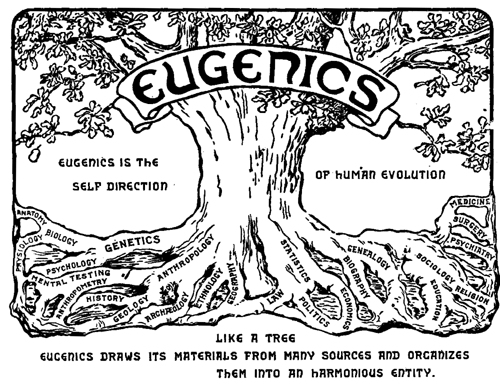
For those unfamiliar with the term, what exactly is eugenics? Grenz and Smith define it this way:

A movement that encourages the study of heredity or the transference of genetically based traits from one generation of living beings to the next, generally with the goal of improving the hereditary endowment of humankind.

Eugenics generally has two sides—positive and negative. Positive eugenics encourages (or even rewards) healthy, intelligent individuals to reproduce. The idea is that they improve the human gene pool by passing along their desirable traits. Negative eugenics discourages reproduction by those exhibiting inferior traits. While this may seem to be a noble idea on the surface, it played out in ugly ways in American history.

Paul Lombardo describes the ugly side as follows:

In the 20th century, application of eugenical theory as a solution to social problems in America led to such ethically problematic practices as wide-scale sexual sterilization of epileptics, the mentally ill, and the retarded, restrictions on the immigration of some ethnic groups, and prohibition of marriages between people of differing racial backgrounds.

That brings us back to North Carolina. Between 1929 and 1974, the NC Eugenics Board authorized the sterilization of 7,600 people. The Charlotte Observer reports:

Some cases approved by the Eugenics Board were people who were mentally ill and sexually aggressive, and families who wanted to stop having children. But the board also authorized sterilizing people who were poor, or part of large families, or whose parents worried that men might take advantage of them. Some victims were as young as 10.

North Carolina is the first state to propose reparations for the victims. It is by no means the only state that implemented such horrendous practices. Some reports estimate that 33 different states had eugenics laws that allowed for forced sterilization and that more than 60,000 American were sterilized in the process.

How did our country get to this point? From an ethical standpoint, it involved the use of a consequentialist ethic. Consequentialism is the idea that ethical decisions are made based on projected outcomes. There are several different theories that implement this process, but the basic idea is that the ends justify the means. In the case of eugenics, the desired end was a society full of healthy, productive, intelligent people. The logic of consequentialism said that any means necessary to produce that desired result is acceptable. This included forcibly prohibiting those deemed “unacceptable” from reproducing.

From a scientific angle, the impetus for eugenics came from the fledgling field of genetics. While the exact nature of genetic study was still a long way off, animal breeders had long known that breeding “superior” animals together generally resulted in better offspring. The process of selective breeding in animals was transferred to humans in the eugenics movement of the late-19th and 20th centuries.

From a political perspective, the value of the society over the individual spurred on the acceptance of eugenics. Social problems involving care for the poor and ill, immigration of those viewed as “undesirable,” and the desire for a progressive society led to the implementation of such laws.

Thankfully, our society has moved past this ugly history. Or have we? While the practice of forced sterilization and eugenics laws have crept back into the darkness of history, the idea still exists and is often promoted.

Many in our society now raise the question of whether parents should be limited in the number of children they can have (e.g., population control policies). Advances in medical technology allowing doctors to diagnose diseases in utero raise the question of selective abortion to ensure that a “less than normal” child does not enter the world. The desire for “well-born” children has brought a new branch of medicine to the forefront. Behind those concepts is the practice of eugenics.

What should be our response biblically? We must not lose sight of the value and dignity of the individual human being. We see from Scripture that we are all created with the purpose to glorify God (1 Cor 6:20; 10:31; Rev 4:11). We all have value to God (Matt 12:11–12) and salvation is made available to all types of people regardless of perceived value by the culture (Gal 3:28). Finally, from the womb to the grave, God sees us each as individuals of value and significance (Psalm 139:13–16).

North Carolina was right to acknowledge their responsibility in devaluing the dignity of the individual. Does $50,000 restore that dignity? No. Is the state right in offering some kind of reparations to the victims? Most likely, yes. Have we moved beyond this as a society? Certainly not. We need a biblical perspective of the value and dignity of the individual human being made in the image of God. Without this, we will probably walk down this road again, just in a different form.

_________________________

Tommy Tomlinson, “N.C. task force recommends $50,000 for eugenics victims,” Charlotte Observer, January 11, 2012.

Stanley J. Grenz and Jay T. Smith, Pocket Dictionary of Ethics (Downers Grove: InterVarsity, 2003).

Paul A. Lombard, “Eugenics,” in The Westminster Dictionary of Christian Ethics, eds., James F. Childress and John Macquarrie (Philadelphia: Westminster, 1986), 209–10.

Sanctity of Human Life

This Sunday is Sanctity of Human Life Sunday in the Southern Baptist Convention. In addition, this month marks the 39th anniversary of the Roe v. Wade decision that opened the door for legalized abortion in the United States. At this time each year, Southern Baptists and other pro-life organizations take a moment to reflect on the tragedy of abortion in our society.

Roe v. Wade is one of the few Supreme Court decisions that most Americans know by name. While many of the more famous decisions represent crucial moments in American history for the rights of the oppressed (Brown v. Board of Education, etc.), Roe v. Wade stands as a blight on American history for the resulting carnage of the abortion industry since January 22, 1973.

According to the Guttmacher Institute, 22% of all pregnancies (excluding miscarriages) end in abortion. Eighteen percent of women who have abortions are teenagers, and more than half are in their twenties. Between 1973 and 2008 (the most recent year for reported statistics), nearly 50 million legal abortions have taken place. In 2008 alone, there were 1.21 million abortions.

The Guttmacher Institute also reports some of the reasons for abortion, stating:

The reasons women give for having an abortion underscore their understanding of the responsibilities of parenthood and family life. Three-fourths of women cite concern for or responsibility to other individuals; three-fourths say they cannot afford a child; three-fourths say that having a baby would interfere with work, school or the ability to care for dependents; and half say they do not want to be a single parent or are having problems with their husband or partner.

The number of abortions in the United States is staggering—50 million in 39 years. These are 50 million lives that were ended. These were 50 million individual persons whose opportunity to develop, live, and thrive was taken from them all in the name of a right to privacy.

In an interesting turn of events on the political spectrum, the Guttmacher Institute reports that states enacted more provisions restricting abortion in 2011 than in any other year. Ninety-two legal provisions placing some level of restriction on abortion access were implemented in 24 states. These restrictions include waiting periods, limitation on insurance coverage, and the requirement to show an ultrasound before an abortion. In Texas, a law was passed requiring that doctors shows patients a sonogram of their unborn babies prior to performing an abortion. Even though opponents are challenging the law in court, a federal appeals court ruled that the law can be enforced while facing further legal challenges.

Perhaps the most fundamental issue in the abortion debate is the question of personhood. Proponents of abortion rights often define personhood in an operational sense, whereby an individual human being is a “person” when he can perform specific functions. These functions typically include conscious awareness of surroundings, reasoning, communication, and self-awareness. The problem with this type of definition is that it not only denies personhood to the unborn, but it also denies personhood to infants, those severely incapacitated by injury or disease, and some individuals at the end of life. By such standards, those individuals could be eliminated because they are not “persons.”

In contrast, personhood is best understood in a substantive sense. In this type of definition, personhood is granted based on the existence of human life. If human life exists, then personhood is established. From a theological standpoint, we can view personhood as an extension of the imago Dei (Genesis 1:26–27). Therefore, since all humans are created in the image of God, then all humans are persons. Since new human life begins at conception, personhood is present from the earliest stages of life.

As we reflect on the sanctity of life, consider the following verses. In Genesis 1:26–27, God declares, “Then God said, ‘Let Us make man in Our image, according to Our likeness; and let them rule over the fish of the sea and over the birds of the sky and over the cattle and over all the earth, and over every creeping thing that creeps on the earth.’ God created man in His own image, in the image of God He created him; male and female He created them.” Jeremiah 1:5 states, “Before I formed you in the womb I knew you, and before you were born I consecrated you.” In Psalm 139:15-16, David writes, “My frame was not hidden from You, when I was made in secret, and skillfully wrought in the depths of the earth; Your eyes have seen my unformed substance; and in Your book were all written the days that were ordained for me, when as yet there was not one of them.”

May we treasure life in the womb and work to show how these tiniest individuals are persons—made in the image of God.

_________________________

Guttmacher Institute, “Facts on Induced Abortion in the United States,” August 2011.

Guttmacher Institute, “States Enact Record Number of Abortion Restrictions in 2011,” January 5, 2012.

Chris Tomlinson, “Texas abortion law can be enforced, court rules,” Star-Telegram, January 10, 2012.

For more study on the issue of abortion, the following resources are helpful:

“Issues at a Glance: Life,” Ethics & Religious Liberty Commission, www.erlc.com/life

Francis J. Beckwith, Defending Life: A Moral and Legal Case Against Abortion Choice (Cambridge: Cambridge University Press, 2007)

John S. Feinberg and Paul D. Feinberg, Ethics for a Brave New World, 2nd ed. (Wheaton: Crossway, 2010)

*This post was first published at www.theologicalmatters.com.

Aquinas on Friendship

Last week I went to the 63rd Annual Meeting of the Evangelical Theological Society in San Francisco, CA. I had the privilege of presenting my paper, “The Forgotten Virtue of Friendship: Thomistic Friendship and Contemporary Christian Ethics.” This paper was an abridged version of a chapter out of my dissertation. I have posted a copy of the paper on the Resources page of my blog.

Without sharing the entire substance of the paper in this post, let me describe why the idea of friendship is important. In our contemporary culture, friendship has become more of an expression of social networks than a true, intimate relationship between individuals. This new understanding of friendship has diluted the robust meaning of friendship that has historically been a part of ethical thought since the time of the Greek philosophers. Online applications, such as Facebook, Twitter, and Google+, measure friendship by the number of followers or people in your circle. However, in most of these applications, there is no measure of intimacy or characteristics found within the historical understanding of friendship that shed any light on whether or not a true relationship actually exists.

Aquinas offered one of the most substantial discussions of friendship within Christian ethical thought. My paper was an attempt to show how we can recover some elements of this robust, love-based friendship for contemporary ethics without succumbing to the situation-based ethics of Joseph Fletcher or the community-based ethics of Stanley Grenz. My full dissertation makes these connections in a much more substantial way.