Last week I was interviewed by 90.9 KCBI (DFW area radio station) for their Christian News Weekly program that airs every Saturday at both 6:30 am and 6:30 pm. The interview came about because of an article in the Southern Baptist Texan a couple weeks earlier. The article and interview focus on issues related to homosexuality and how the church can address them. The audio from the interview is available here on KCBI’s website (The audio should be available through Friday, Nov 18. My interview begins about one-third of the way into the audio.), and the article in the Texan is available here. I hope you find these resources helpful.
Tag: Ethics
Church to Vote on Continuing Heterosexual Marriage Ceremonies
 A church in Raleigh, NC, is gearing up for a vote on November 20 to decide if it will stop holding “state-sanctioned marriages” on their property. According to an article in Raleigh’s News & Observer, the deacon council at Pullen Memorial Baptist Church drafted a marriage equality statement in response to pastor Nancy Petty’s conscientious objection to endorsing marriages involving a state license for heterosexual couples while the state forbids same-sex marriage. Brooks Wicker, the co-chair of the deacon council stated,
For us, it’s very much a civil rights issue. It’s in keeping with our tradition of trying to live into the gospel, treating everyone justly and fairly.
On Nov 20, the congregation will hold a vote to determine the future of marriage ceremonies at the church. While this may seem unusual, Pullen Memorial is no stranger to the unusual in Baptist life. The church began embracing the “social gospel” and ecumenism in the 1930’s. In 1950, Harry Emerson Fosdick delivered the dedication sermon for their new sanctuary. In 1992, the church endorsed “unqualified acceptance” of gay and lesbian members. This move ultimately led to their ouster from the Raleigh Baptist Association, Baptist State Convention of NC, and Southern Baptist Convention.
Now the church stands on the cusp of eliminating marriage ceremonies for the foreseeable future from their practice. Petty, a self-professed lesbian, told the congregation that endorsing state-sanctioned marriages for heterosexuals was a burden on her conscience, and the church responded by bringing it up for a vote.
The real question here is whether or not God gets a vote in this matter. Wicker noted that he believed it was in keeping with the church’s tradition of living “into the gospel,” but I believe he has the direction wrong. It appears that “living into the gospel” is a way of adding cultural biases to the gospel. He sees gay-marriage as a civil right that needs to be affirmed by the gospel and that our lives change the gospel. However, Scripture suggests that we need the gospel to live in us and allow it to change us. Rather than living into the gospel, I want the gospel to live in me.
So what should we make of this vote? I think it is fairly clear from their history and current trajectory that Pullen Memorial will vote to cease all marriages until same-sex marriage is legalized by the state of NC. The unfortunate part of the vote is that a church will most likely vote contrary to Scripture. From the institution of the first marriage in Genesis 2, God has made it clear that marriage is between a man and a woman. In Genesis 2:22–24, we read:
The Lord God fashioned into a woman the rib which He had taken from the man, and brought her to the man. The man said, “This is now bone of my bones, and flesh of my flesh; she shall be called Woman, because she was taken out of Man.” For this reason a man shall leave his father and his mother, and be joined to his wife; and they shall become one flesh.
Throughout the rest of Scripture, every reference to marriage is always between a man and a woman. In Leviticus 18:22 and 20:13, homosexual activity is clearly condemned (called an abomination), and that condemnation is repeated in Romans 1:24–32 and 1 Corinthians 6:9–11. Scripture makes it very clear that homosexual activity is against nature and against God’s intended design. Attempting to dignify it by placing the label of “marriage” on it simply flies in the face of what God intended for marriage as well.
So will God get a vote at Pullen Memorial? Let’s think about this—theology is not governed by democracy. Majority vote does not decide what truth is. God gets the only vote that matters, and he has already cast the deciding vote on this issue. Marriage is a covenant between one man and one woman. It is designed to last a lifetime. No church vote can change that. If Pullen Memorial wants to be on the side of God, they will change their stand on homosexual marriage. If they don’t, then they aren’t really attempting to be a church in submission to Christ and his Word. They might as well change their name to Pullen Memorial Social Club.
_________________________
Josh Shaffer, “Church puts civil marriage rites to vote,” News & Observer, November 11, 2011.
I would like to thank my friend, Randy Mann, for bringing this article to my attention. Check out his website at www.randymann.net.
Penn State and the Lost Idea of Personal Responsibility
 Yesterday, I gave a lecture on Personal and Corporate Responsibility for the Richard Land Center for Cultural Engagement (I’ll link to the audio when it becomes available). The thrust of my lecture dealt with the idea of corporate responsibility in the business world and an attempt to redefine something that has become a mantra for environmental concerns. My attempt at redefining corporate responsibility brought the focus back to society as a whole and not just a niche. At the end, I attempted to tie corporate responsibility to personal responsibility by showing that all aspects of corporate responsibility are an extension of personal responsibility. In that lecture, I noted the tragic circumstances at Penn State University as an example corporate responsibility failing because no one was willing to take personal responsibility along the way. In light of what has continued to transpire at that university, I want to offer a slightly re-worked version of my lecture from yesterday applied to this particular situation.
Relying heavily on an article by Robert P. George, we can see three pillars of a healthy society: 1) respect for individual human beings and their dignity, 2) the institution of the family, and 3) a fair and effective system of law and government. Aside from the alleged crime, I want to look at the response by the university as a study in corporate vs. personal responsibility in light of these three pillars.
The university (and the individuals involved) lacked a respect for the dignity of the victims. There seemed to have been a concern for the personal interests of the perpetrator and those with knowledge of the crime, but there was no concern for the dignity of the boys. As each person up the chain of command refused to take personal responsibility for alerting the authorities, they diminished the opportunity for the university to take corporate responsibility. As we see now, the university is attempting to correct this stance, but only now that they have been caught in a cover-up. The reputation of the institution is being discredited, and the individuals involved are losing their jobs. The message the university sent to the public is that they had more concern for the university’s reputation than the dignity of the victims.
The institution of the family is essential to a healthy society. George calls it “the original and best department of health, education, and welfare.” Jennifer Roback Morse states, “There is no substitute for the family in helping self-centered infants develop into cooperative adults.” The problem at Penn State is that the university saw its own “family” interests as more important than protecting the institution of the family. These boys have been assaulted, abused, and scarred for life. Their family structure has been permanently altered because they have been subjected to a version of sexuality that is distorted far outside God’s design. There was absolutely no respect for the institution of the family on the perpetrator’s part, and there was indifference to the institution of the family on the part of the university.
Finally, a fair and effective system of law and government is crucial to a healthy society. In this case, that system was in place to handle the problem, but no one alerted the proper authorities. Now that the police and judicial system are aware of the crimes, they are working swiftly to bring about justice. However, such justice could have been enacted years ago had those with knowledge of the crime taken personal responsibility to report what they had seen and heard.
What is next for Penn State? Obviously, the leadership is in a state of flux considering that four top officials have been fired including the president and the legendary football coach who has been the face of the institution for decades. One can only guess that the NCAA will step in and place sanctions on the football program—perhaps even the dreaded “death penalty” (suspending all football for at least two years).
With the tragedy at Penn State, we see that all three pillars of a healthy society were ignored or dismissed. Penn State University may very well look back at this week as the moment the university changed. I hope and pray it will be a change that involves acknowledging that football is just a sport, all people are worthy of respect and dignity (not just those who win football games), and that the government in its purest function is here for protection from evil and to establish order in society. Unfortunately, little will change unless we recognize that personal responsibility comes first.
_________________________
Robert P. George, “Making Business Moral,” First Things 186 (October 2008): 17–19.
Jennifer Roback Morse, Love & Economics (San Marcos: Ruth Institute Books, 2008).
For more information about the scandal at Penn State University, see Mark Viera, “Paterno Is Finished at Penn State, and President Is Out,” The New York Times, November 9, 2011.
One Man, 150 Children
According to an article posted yesterday on The New York Times, the Donor Sibling Registry has identified 150 half siblings from one anonymous sperm donor. The article notes:
As more women choose to have babies on their own, and the number of children born through artificial insemination increases, outsize groups of donor siblings are starting to appear. While Ms. Daily’s group is among the largest, many others comprising 50 or more half siblings are cropping up on Web sites and in chat groups, where sperm donors are tagged with unique identifying numbers.
I addressed the issue of egg and sperm donation as an ethical dilemma in January, but this issue continues to creep back into the picture. While the article to which I responded in the winter celebrated the idea of donation, this current article paints a much darker picture. The author states:
Now, there is growing concern among parents, donors and medical experts about potential negative consequences of having so many children fathered by the same donors, including the possibility that genes for rare diseases could be spread more widely through the population. Some experts are even calling attention to the increased odds of accidental incest between half sisters and half brothers, who often live close to one another.
The interesting thing is that there are few regulations in the United States governing the donation of reproductive material. Donors remain anonymous and are simply assigned a unique identification number. Men can donate a seemingly unlimited number of times. Potential mothers typically request a specific donor’s sperm with no idea of how many other children have been conceived with his genetic material. Behind all of it, donor banks make a fortune from the sperm of popular donors.
Wendy Kramer, founder of the Donor Sibling Registry, states, “Just as it’s happened in many other countries around the world, we need to publicly ask the questions ‘What is in the best interests of the child to be born?’ and ‘Is it fair to bring a child into the world who will have no access to knowing about one half of their genetics, medical history and ancestry?” These questions are legitimate questions to ask the government and the industry behind this growing problem.
In Great Britain, regulations have been in place since the early 1980’s to limit the number of offspring a single donor could father (10 per donor). While most donors in the U.S. are promised a small number of potential offspring, many have found that they now have dozens of children. The article states:
Ms. Kramer, the registry’s founder, said that one sperm donor on her site learned that he had 70 children. He now keeps track of them all on an Excel spreadsheet. “Every once in a while he gets a new kid or twins,” she said. “It’s overwhelming, and not what he signed up for. He was promised low numbers of children.”
So what are we to make of this? As I noted in January, the biblical model of procreation is intended to take place within the confines of marriage (Gen 1:28; 4:1; Heb 13:4). The introduction of donors (sperm and/or eggs) creates an unusual moral dilemma that raises the question of adultery. Have these reproductive technologies created a new category of adultery—reproductive adultery? While difficult to say for certain, we certainly need to raise that question.
In addition, the article describes another set of problems that often go unnoticed—those related to the children.
Experts are not certain what it means to a child to discover that he or she is but one of 50 children—or even more. “Experts don’t talk about this when they counsel people dealing with infertility,” Ms. Kramer said. “How do you make connections with so many siblings? What does family mean to these children?”
How will children deal with the fact that they have dozens, or even hundreds, of siblings? While many parents typically want to keep it a secret from their children that they were conceived with the help of donors, can they afford to do so with the possibility of incest?
Technology is a great thing, but too often we accept the benefits of technological advances without considering the long-term ramifications. This is one example of something that has the potential to cause great problems in the future—and the future is now.
_________________________
Jacqueline Mroz, “One Sperm Donor, 150 Offspring,” The New York Times, September 5, 2011.
The Donor Sibling Registry, https://www.donorsiblingregistry.com/.
Evan Lenow, “Who’s the Mother?: The Tangled Web of New Reproductive Technologies,” January 11, 2011.
The Tragedy of Pregnancy Reduction
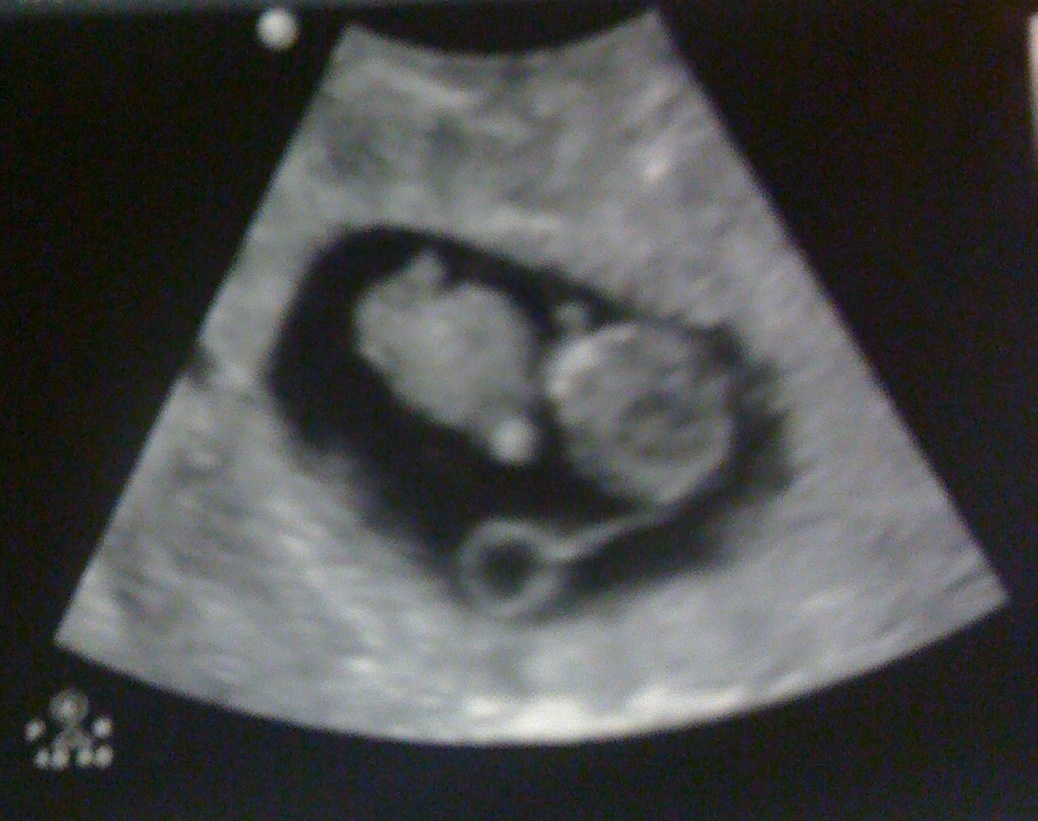 As I write this post, I am waiting to get the phone call from my wife saying we need to head to the hospital for the birth of our fourth child. The last forty weeks have passed amazingly fast and painfully slow at the same time. In the midst of what will most likely be the longest streak of 100+ degree days on record in Fort Worth, we await the arrival of our precious daughter. Some people think we are crazy for having four children. When they find out our oldest is only 6, it confirms it in their minds.
In contrast to our anticipation of our child’s birth, the New York Times ran a story this week on the increasing phenomenon of pregnancy reduction—specifically the reduction of twins to a singleton. The article is heartbreaking and painful at times to read. The article opens with the following story:
As Jenny lay on the obstetrician’s examination table, she was grateful that the ultrasound tech had turned off the overhead screen. She didn’t want to see the two shadows floating inside her. Since making her decision, she had tried hard not to think about them, though she could often think of little else. She was 45 and pregnant after six years of fertility bills, ovulation injections, donor eggs and disappointment—and yet here she was, 14 weeks into her pregnancy, choosing to extinguish one of two healthy fetuses, almost as if having half an abortion. As the doctor inserted the needle into Jenny’s abdomen, aiming at one of the fetuses, Jenny tried not to flinch, caught between intense relief and intense guilt.
“Things would have been different if we were 15 years younger or if we hadn’t had children already or if we were more financially secure,” she said later. “If I had conceived these twins naturally, I wouldn’t have reduced this pregnancy, because you feel like if there’s a natural order, then you don’t want to disturb it. But we created this child in such an artificial manner—in a test tube, choosing an egg donor, having the embryo placed in me—and somehow, making a decision about how many to carry seemed to be just another choice. The pregnancy was all so consumerish to begin with, and this became yet another thing we could control.”
Jenny’s last sentence tells it all. She said, “The pregnancy was all so consumerish.” If she could choose to get pregnant in the first place through donor-based IVF, why couldn’t she simply choose that she only wanted one of the babies?
The language found throughout the article relates to choices and desires. The story about Jenny continues:
The idea of managing two infants at this point in her life terrified her. She and her husband already had grade-school-age children, and she took pride in being a good mother. She felt that twins would soak up everything she had to give, leaving nothing for her older children. Even the twins would be robbed, because, at best, she could give each one only half of her attention and, she feared, only half of her love.
Dr. Richard Berkowitz, a perinatologist at Columbia University Medical Center, asks, “In a society where women can terminate a single pregnancy for any reason—financial, social, emotional—if we have a way to reduce a twin pregnancy with very little risk, isn’t it legitimate to offer that service to women with twins who want to reduce to a singleton?” His question sums up the whole debate from a secular perspective. If our society has already opened the door for abortion-on-demand with no concern for reason, then there is nothing standing in the way of pregnancy reduction except social mores.
Despite the logic of the argument, society is still uneasy with certain forms of pregnancy reduction. Reducing twins to a single birth receives the least amount of public support. An interesting facet of this discussion is that the option of pregnancy reduction was not even possible a few decades ago. Most proponents proclaim it as a victory for women’s choice, but Josephine Johnston, a bioethicist at the Hastings Center, sees it differently:
In an environment where you can have so many choices, you own the outcome in a way that you wouldn’t have, had the choices not existed. If reduction didn’t exist, women wouldn’t worry that by not reducing, they’re at fault for making life more difficult for their existing kids. In an odd way, having more choices actually places a much greater burden on women, because we become the creators of our circumstance, whereas, before, we were the recipients of them. I’m not saying we should have less choices; I’m saying choices are not always as liberating and empowering as we hope they will be.
The culture of death that views abortion and pregnancy reduction as socially acceptable has gripped our American culture. This article, however, exposes the unease with which our culture has accepted these horrendous practices. It reminds me of Romans 2:14–16 where Paul writes, “For when Gentiles who do not have the Law do instinctively the things of the Law, these, not having the Law, are a law to themselves, in that they show the work of the Law written in their hearts, their conscience bearing witness and their thoughts alternately accusing or else defending them, on the day when, according to my gospel, God will judge the secrets of men through Christ Jesus.” Their consciences are bearing witness against their actions because they know that what they are doing is wrong. The guilt is a result of God’s general revelation to mankind testifying that such pregnancy reductions are sinful.
I pray that we would stop seeing these precious lives in the womb as fetuses and see them as God sees them—humans made in the image of God. In Psalm 139:13–16, David proclaims:
For You formed my inward parts;
You wove me in my mother’s womb.
I will give thanks to You, for I am fearfully and wonderfully made;
Wonderful are Your works,
And my soul knows it very well.
My frame was not hidden from You,
When I was made in secret,
And skillfully wrought in the depths of the earth;
Your eyes have seen my unformed substance;
And in Your book were all written
The days that were ordained for me,
When as yet there was not one of them.
_________________________
Ruth Padawer, “The Two-Minus-One Pregnancy,” The New York Times, August 10, 2011.
 Ethics as Worship