Abortion and Self-Ownership

Where does the right of self-ownership come from? Is the pro-abortion argument that a woman can do whatever she wishes with her body actually grounded in any theological or philosophical ideas? How does argument relate to the supposed right to abortion in the United States?

Canon & Culture, a project of the Ethics & Religious Liberty Commission, published a piece I wrote on the issue of abortion and self-ownership. Here is an excerpt:

Last July I boarded a bus and drove down to Austin for a pro-life rally on the steps of the Texas State Capitol. We arrived more than an hour before the scheduled start time of the rally, so I had the opportunity to take in my surroundings and observe the arguments being made by the abortion-rights protestors. In what was often crass language, the abortion-rights argument being made at the Capitol that day essentially boiled down to one point—a woman has the right to do what she wants with her own body. This can be described as a right to privacy based upon self-ownership.

Since this right is not explicitly spelled out in the Constitution, where does it find its origin? In contemporary jurisprudence, the right to do what you want with your own body (i.e., the right to privacy) is drawn from the “penumbras” and “emanations” of the Bill of Rights according to Griswold v. Connecticut and out of the 14th Amendment’s restriction on the state from depriving “any person of life, liberty, or property, without due process of law.” Applied to the abortion issue, these ideas regarding the right to privacy form the foundation of the Roe v. Wade decision that opened the door for abortion on demand. However, the supposed “right to privacy” found in the Bill of Rights and the 14th Amendment still does not make self-ownership clear.

Even though most abortion-rights proponents do not make the explicit connection, the right of self-ownership is typically attributed to the work of John Locke in The Second Treatise of Government. Locke writes, “Though the earth and all inferior creatures be common to all men, yet every man has property in his own person. This nobody has any right to but himself” (V.27). There is no doubt that John Locke’s work was very influential upon the Founders of the United States, and language from the Second Treatise appears directly in the Declaration of Independence and the Constitution. However, are we correct in inferring a right to self-ownership of our bodies from Locke?

You can read the rest of the article here.

*You may notice that this article is a little more academic than what I usually post on my website, but that is the purpose of Canon & Culture. Their purpose is “to help build and strengthen the church’s social, ethical, and moral witness by providing thoughtful content from leading thinkers that inspires a rising generation of evangelicals to think Christianly about the public square and the common good.”

Biblically Correct on RightNow Media

I have mentioned before that I worked last summer on a Bible study for my home church to use in the fall. At the end of November, Biblically Correct became available in book form. I am now happy to announce that the video series from the women’s ministry at Bellevue Baptist Church is now available on RightNow Media.

Biblically Correct is a 10-week study addressing issues of ethics and culture from a biblical perspective. My goal was to point others to Scripture as the source of authority in engaging culture with truth. The men’s and women’s ministries at Bellevue taught through the study in the fall, and the women’s ministry produced videos from their large-group teaching time. The teachers in the videos are Donna Gaines (wife of Steve Gaines, pastor of Bellevue) and Jean Stockdale (long-time MOMs teacher at Bellevue).

RightNow Media is a subscription based service providing high-quality Bible study materials for churches. A church can buy a subscription and have the entire RightNow Media library accessible to its members. Your church will need a subscription to view the videos, but the link to the study is available here.

If your church does not have a subscription but you would still like to see the videos, they are still available on Bellevue’s website.

If you are interested in purchasing the Biblically Correct book, you can find it on Amazon and the CreateSpace store.

Coming Soon: Biblically Sound: Embracing Doctrine for Life (should be available in May).

Are Corporations People Too?: Hobby Lobby and Religious Liberty

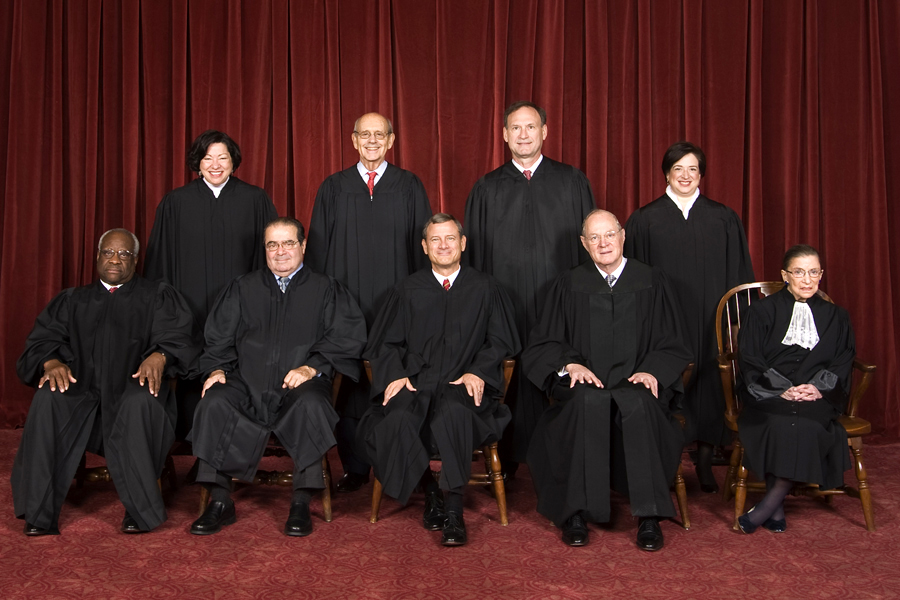
Supreme_Court_US_2010Who would have ever imagined that a craft store chain owned by a Christian family would be at the center of a Supreme Court case about sexuality, abortifacient drugs, the role of corporations, and religious liberty? Oral arguments were heard today in the Supreme Court case Sebelius v. Hobby Lobby. The central point of the case is whether or not the Green family, owners of Hobby Lobby and Mardel Christian bookstores, has the right to exercise their religious freedom in opting out of the Health and Human Services (HHS) mandate requiring employer-provided health plans to offer emergency birth control drugs at no charge to their employees. The Greens have objected on religious grounds that such emergency birth control options are tantamount to abortion and that providing abortion-inducing drugs is a violation of their deeply held religious beliefs.

Trying to predict what the Supreme Court will decide is an exercise in futility, so I will not go down that road. However, I do want to highlight a few interesting notes from today’s oral arguments.

The first is not all that surprising (and possibly not all that interesting)—the high court appears divided. From the best one can tell from the questioning, the Supreme Court is split 4-4 with Ginsburg, Breyer, Kagan, and Sotomayor apparently siding with the government and Roberts, Thomas, Scalia, and Alito leaning towards Hobby Lobby. This leaves Justice Anthony Kennedy as the deciding vote in an otherwise divided Court. This is familiar territory for the current version of the Supreme Court.

The second item of note is that the role of a corporation seems to be a big question. Some of the liberal justices seemed to imply that corporations should simply be able to pick up the tab for the healthcare expenses or fees for not providing healthcare with no impact on the business or the economy. They did not seem to take into account that these healthcare costs have to be paid by someone and that the costs would most likely be passed along to the customer. Justices Kagan and Sotomayor also pressed Paul Clement, the attorney arguing for Hobby Lobby, about whether corporations could opt out of other healthcare options for their employees. Lyle Denniston reports that they “suggested that if corporations gain an exemption from having to provide birth-control services for their female employees, then the next complaint would be about vaccinations, blood transfusions, and a whole host of other medical and non-medical services that a company or its owners might find religiously objectionable.”

On the other hand, Justice Alito pushed back against Solicitor General Donald Verrilli regarding the purpose of corporations. He asked the Solicitor General if the only purpose of corporations was to “maximize profits.” If the object is only to maximize profits, then corporations would have no other rights. However, if corporations serve other purposes, then they might have the right to protection under the free exercise of religion clause in the First Amendment.

The third item is the most interesting development in my opinion. It relates to the rights of a corporation to make a claim regarding discrimination. The government argued that for-profit corporations like Hobby Lobby have no standing to file a claim against the government based on religious discrimination. On the surface this seems to make sense because corporations are not churches, nor are they individuals with religious beliefs. However, the government has already held that corporations can file claims based on racial discrimination. In the same sense, corporations are not individuals of a particular race or ethnicity. The racial discrimination claims have typically been based on the race and ethnicity of the owners.

Applying the same standard to the religious freedom aspect of the Hobby Lobby case, it would appear that the Green family’s deeply held religious beliefs (and clear articulation of those beliefs in company documents) would provide the corporation with the same protections as those guaranteed to them as individuals. This argument could prove to be central in the upcoming decision of the Court.

Once again, we will be left to wait for months until hearing the decision of the Supreme Court that will most likely come in June. Until then, it is futile to speculate what the Court will decide. However, there is one thing that we can do. We can pray for the justices of the Supreme Court that God would grant them wisdom in judging these matters. We should pray for godly wisdom that they would rule according to God’s will. We should pray that they would value life in the way that God values life—seeing those in the womb as no different than a full-grown adult (Psalm 139:13–16).

I urge you to join me in prayer for John Roberts, Antonin Scalia, Anthony Kennedy, Clarence Thomas, Ruth Bader Ginsburg, Stephen Breyer, Samuel Alito, Sonia Sotomayor, and Elena Kagan. The future of religious liberty in the United States is in their hands.
_________________________
Lyle Denniston, “Argument recap: One hearing, two dramas,” SCOTUSblog, March 25, 2014.

Derrick Morgan, Hans von Spakovsky, and Elizabeth Slattery, “How the Supreme Court Justices Reacted to Today’s Hobby Lobby Arguments,” The Foundry, March 25, 2014.

Ilya Shapiro, “Is There No Alternative to Forcing People to Violate Their Religious Beliefs?” Cato Institute, March 25, 2014.

Federal Judge Strikes Down Texas Marriage Amendment

same sex marriage graphcIn what is now a string of cases decided by federal judges regarding state laws, U.S. District Judge Orlando Garcia has struck down Texas’ constitutional amendment defining marriage as a relationship between one man and one woman. After the state legislature presented the amendment in 2005, 76% of Texas voters approved the addition of the amendment to the state constitution.

Judge Garcia immediately stayed his ruling pending an inevitable appeal. This should be quite interesting considering that the man who will be responsible for the appeal, Texas Attorney General Greg Abbott, is the hands-down favorite to receive the Republican nomination for governor. Abbott will be responsible for filing the appeal while also managing his campaign against likely Democratic nominee Wendy Davis.

This case came about when a lesbian couple filed suit against the state for not recognizing their same-sex marriage performed in Massachusetts in 2009. According to the Fort Worth Star-Telegram article, the plaintiffs “argued that the state’s gay marriage ban had caused them undue hardship that other married couples do not face. For example, the couple have one child together, but because Texas does not recognize their union, only one parent’s name was allowed on the birth certificate.”

The logic of the names on a birth certificate is quite interesting.  Biologically speaking, only one of the women is the mother although it is likely they both wanted to be listed as mothers. This demonstrates how the redefinition of marriage is attempting to separate the relationship completely from any aspect of procreation. Assuming the couple used an anonymous sperm donor as the father, then standard procedure would be to list the woman who gave birth as the mother. A second mother is biologically impossible for the purposes of a birth certificate. It is unclear how this causes undue hardship related to a medical record that is intended to connect a child to his/her biological parents.

While marriage does not require procreation, separating marriage and procreation completely is illogical. Melissa Moschella has recently written that children have a right to know who their biological parents are and a right to a relationship with them. She states:

The biological parent-child relationship is uniquely intimate and comprehensive, at least from the child’s perspective. A child’s relationship to his biological parents is the closest of that child’s human relationships. It is identity-determining. To be born of different parents is to be an entirely different person. This, combined with the observation that receiving proper care is crucial for the child’s current and future well-being, implies that biological parents are the ones with the strongest obligation to ensure that their child is well-cared-for.

When someone makes the claim that they have a right to produce a birth certificate containing two mothers and no father as the biological record of the child’s birth, they undermine the right of the child to know his genetic history. If marriage includes unions other than those between a man and a woman, it undermines the creation ordinance designed to be the avenue of procreation and perpetuation of the human race. This is not an undue hardship placed on the couple by the state. It is Biology 101.

In just the last two months, marriage amendments have been overturned by judicial action in Utah, Oklahoma, Virginia, and Texas. Seventeen other states allow same-sex marriage (or are in the process of allowing it). In addition, U.S. Attorney General Eric Holder just recently told state attorneys general that they are not obligated to defend traditional marriage laws in court if they do not want to do so.

I tell my classes every semester that our children will grow up with a different understanding of marriage than what we have. I have been fighting and praying that we would be able to stave off the redefinition of marriage. Now it seems that the U.S. Supreme Court will have no choice but to hear these cases and rule on them, potentially providing a new definition of marriage.

Honestly, I am not optimistic about any future SCOTUS rulings; however, we do not place our hope in judges, governors, legislators, or presidents. Instead, our hope is in Jesus Christ, and he has already declared:

Have you not read that he who created them from the beginning made them male and female, and said, “For this reason a man shall leave his father and mother and be joined to his wife, and the two shall become one flesh”? So they are no longer two, but one flesh. What therefore God has joined together, let no man separate. (Matthew 19:4-6)

*If you are interested in learning more about how to respond to the campaign to redefine marriage, consider attending the It Takes a Family conference on the campus of Southwestern Baptist Theological Seminary, co-hosted by the Ruth Institute and the Land Center for Cultural Engagement, on April 11, 2014. More information and registration is available by clicking here.

_________________________

Edgar Walters, “Federal judge rules Texas’ gay marriage ban unconstitutional,” Star-Telegram, February 26, 2014.

Melissa Moschella, “The Rights of Children: Biology Matters,” The Public Discourse, February 20, 2014.

To Live Is Christ and To Die is Gain: The Morality of Suicide

The Pew Research Center released the results of a recent study on views of end of life medical treatment. Among the more interesting findings is how different faith groups view the morality of ending life. In an analysis of the findings, Christianity Today reports, “About a quarter of evangelicals believe that a person has a moral right to suicide if he or she is ready to die because living is now a burden, or if that person is an extremely heavy burden on his or her family.”

When the situation is escalated to an incurable disease, 36% of white evangelicals believe a person has a moral right to suicide. If the patient “is in a great deal of pain” with “no hope of improvement,” the percentage increases to 42%.

Should we be surprised by these increasing numbers? Is it concerning that growing percentages of evangelicals (and every other religious category) view suicide as a moral right?

When I was a seminary student, I took a class on the ethics of life and death. One of my classmates made a presentation asserting that he would rather take his life than live through a difficult disease. He based his conclusion on the words of Philippians 1:21,

For to me, to live is Christ and to die is gain.

My classmate rebuffed any attempts to be talked out of his view that his moral right—even his biblical right—was to take the supposed perspective of Paul and seek death in order to be united with Christ.

While the Pew Research Center did not equate the changing views of faith groups with the Pauline declaration of Philippians 1:21, I cannot help but think that is at least in the background. Is this what Paul meant? Did he really intend to encourage Christians to seek death over life in difficult circumstances?

Let’s take a moment and consider what was happening in Paul’s life.

In Phil 1:7, we see that Paul has been imprisoned. He is fighting for his own freedom (and possibly his life) in front of the Roman authorities. Even though Paul was a Roman citizen and may have spent some of his imprisonment in house arrest, the Roman authorities were still not known for making the lives of their prisoners as comfortable as possible. In fact, it is likely that Paul considered his own life to be at risk from the Roman government. His spirits are buoyed by the love and affection of the believers in Philippi (Phil 1:3–11), but life is still hard.

Taken out of context, Phil 1:21 seems to be Paul’s final desire for death in the face of his circumstances. But we need to take a closer look. He goes on to say, “But if I am to live on in the flesh, this will mean fruitful labor for me; and I do not know which to choose” (Phil 1:22). Verse 22 puts Paul’s struggle in context. He knows that if he continues living he will be fruitful spreading the gospel, but if his life ends he will be united with Christ. We then read the following:

But I am hard-pressed from both directions, having the desire to depart and be with Christ, for that is very much better; yet to remain on in the flesh is more necessary for your sake.  Convinced of this, I know that I will remain and continue with you all for your progress and joy in the faith, so that your proud confidence in me may abound in Christ Jesus through my coming to you again. (Phil 1:23–26)

Paul sets aside his own personal desire to be united with Christ and sets his sights on living for the benefit of those he loves. He considers it to be more necessary that his sufferings continue for the sake of the Philippians so that they will progress in their faith.

Now let’s revisit the topic at hand. Do we have a moral right to suicide? The text most often employed to justify this right (Phil 1:21) actually compels us to continue living for the sake of others. No matter how bad the circumstances are, our suffering can be beneficial for the faith of others.

Suicide is often considered an escape from the pain of this world. No one desires to endure an extended bout with a terminal illness. No one wants to be a burden on family. However, claiming a moral right to suicide does not take into account the biblical understanding of the value of life and how persevering in terrible circumstances can build the faith of others and advance the gospel.

_________________________

Pew Research Center, “Views on End-of-Life Medical Treatments,” November 21, 2013.

Sarah Eekhoff Zylstra, “More Evangelicals Believe Suicide Is a Moral Right,” Christianity Today, November 21, 2013.