Obama Supports Gay Marriage

On the heels of the referendum vote in North Carolina yesterday, President Obama came out today in support of gay marriage in an interview with ABC News. Despite the fact that many referendum votes on gay marriage have resulted in huge margins of victories for supporters of traditional marriage (the NC vote was 61%–39% in favor of the marriage amendment), the President has reached his conclusions on the basis of personal experience.

President Obama had the following to say regarding the evolution of his position:

I have to tell you that over the course of several years as I have talked to friends and family and neighbors when I think about members of my own staff who are in incredibly committed monogamous relationships, same-sex relationships, who are raising kids together, when I think about those soldiers or airmen or marines or sailors who are out there fighting on my behalf and yet feel constrained, even now that Don’t Ask Don’t Tell is gone, because they are not able to commit themselves in a marriage, at a certain point I’ve just concluded that for me personally it is important for me to go ahead and affirm that I think same sex couples should be able to get married.

Another telling point he made in the interview is that he previously thought that civil unions would have been sufficient to guarantee rights of hospital visitation and other rights related to marriage. He also expressed concern about infringing on the traditional and religious connotations of the term “marriage.” However, he finally concluded that he needed to stake his claim in support of same-sex marriage.

The President also considers the debate over same-sex marriage to be generational. He recounted that he speaks to Republicans on college campuses who share his views about same-sex marriage despite the fact that they have differing views on other policies.

Another interesting element of the interview is that the President recognizes his departure the historic Christian position on homosexuality. He states:

[Y]ou know, we are both practicing Christians and obviously this position may be considered to put us at odds with the views of others but, you know, when we think about our faith, the thing at root that we think about is, not only Christ sacrificing himself on our behalf, but it’s also the Golden Rule, you know, treat others the way you would want to be treated.

While it may be a subtle acknowledgement, I am thankful to see that President Obama recognizes his views are at odds with the Christian community. In essence, he places his own personal experience above the teaching of Scripture and the church. Unfortunately for the President, this places him in a precarious position for an ethical standard. While he claims to live by the principles of Scripture, he is willing to set aside the standards of his own choosing to make himself and his friends feel better about their own experience. Instead of filtering his views through the lens of Scripture, he has filtered Scripture through the lens of experience.

Such an approach to ethics carries severe risks because the personal experience of individuals can be used to justify almost anything. What happens when the President meets polygamists who are in committed relationships seeking to rear their children? What happens when the President befriends a brother and sister who desire to have their incestuous relationship recognized as a legitimate marriage? If personal experience is our only guide, then we have jumped headlong down a very slippery slope.

_________________________

Rick Klein, “President Obama Affirms His Support for Same Sex Marriage,” May 9, 2012.

Defining Marriage in Politics

Tomorrow is a big day for marriage in North Carolina. The statewide primary election includes a vote on a referendum seeking to place a constitutional amendment on the books defining marriage as a union between a man and a woman. This would, in effect, place a ban on same-sex marriages in the state. Heavy hitters from both sides of the spectrum have weighed in to the discussion including Billy Graham supporting the amendment and Bill Clinton speaking against it.

The May 8 vote in North Carolina comes on the heels of other politicos expressing their views on same-sex marriage. Over the weekend, Vice President Joe Biden declared that he is “absolutely comfortable” with same-sex marriage. Biden’s comments stirred quite a bit of controversy among White House staffers since President Obama has yet to make any definitive statement regarding his own position. He has said that his views are still evolving. This morning, Education Secretary Arne Duncan also affirmed his support for gay marriage.

Both the marriage amendment vote and the statements by Biden and Duncan bring to the forefront the discussion of the definition of marriage. In all of these circumstances, marriage is being defined in political and legal terms. In his “Meet the Press” interview, Biden said:

I am absolutely comfortable with the fact that men marrying men, women marrying women and heterosexual men and women marrying are entitled to the same exact rights, all the civil rights, all the civil liberties.

Biden claims that marriage is about civil rights. These civil rights include inheritance rights, the ability to file joint tax returns, property rights, etc. This line of reasoning identifies the marriage debate as one similar to the civil rights debate of the 1960’s.

The NC marriage amendment reads as follows:

Marriage between one man and one woman is the only domestic legal union that shall be valid or recognized in this state. This section does not prohibit a private party from entering into contracts with another private party; nor does this section prohibit courts from adjudicating the rights of private parties pursuant to such contracts.

This views marriage as a legal contract recognized by the state. It is interesting to note that the amendment allows for other avenues to address property rights of individuals who want to enter contracts that are outside the legally recognized status of marriage.

What neither of these political definitions address is one of the most foundational roles of marriage—the rearing of children. Both theologically and biologically, one of the main ends of marriage is procreation and the rearing of children. In fact, this is a very real public good accomplished through marriage.

In Genesis 1:28, we see that God commands the first man and woman to be fruitful and multiply. In this very first command, we have the institution of one of the ends of marriage—procreation. By implication in that command is the idea that the couple will nurture their own children to maturity until the children can form marriages of their own and repeat the process.

Biologically, we recognize that heterosexual marriages are the only types of marriages that can reproduce their own biological offspring. Thus, homosexual marriages are cut off from accomplishing the task of rearing their own children.

Of course, we must admit that not all marriages include children and not all marriages that do include children are successful at rearing them. However, this does not invalidate this aspect of the argument against same-sex marriage. The biological potentiality of reproduction in heterosexual marriage points to the societal good accomplished by fathers and mothers in committed marriages.

The civil rights argument for same-sex marriage must institute a false limit to prevent the same argument from being used for polygamous, polyamorous, and incestuous marriages. True fidelity to the civil rights argument, by necessity, must include those forms of marriage in the definition. However, most proponents of homosexual marriage desire to stop short of that definition—claiming monogamy is still the ideal.

As we consider the political definitions of marriage thrust upon the public square by referendum and talking heads, we must recognize that there is more to the definition of marriage than just a contractual arrangement between a man and a woman. I have just attempted to demonstrate one aspect of the traditional definition of marriage neglected in recent political attempts to define marriage. A full discussion of a well-rounded definition of marriage is reserved for another time.

Let us not be sidetracked in our understanding of marriage to limit it simply to a domestic legal union recognized by the state. Certainly that is part of the contemporary context of marriage, but there is more to it than that.

_________________________

John Frank, “Final poll gives marriage amendment clear advantage,” News and Observer, May 7, 2012.

Obama Cabinet member Arne Duncan backs gay marriage, one day after Biden comments,” Fox News, May 7, 2012.

Interview on 90.9 KCBI

Last week I was interviewed by 90.9 KCBI (DFW area radio station) for their Christian News Weekly program that airs every Saturday at both 6:30 am and 6:30 pm. The interview came about because of an article in the Southern Baptist Texan a couple weeks earlier. The article and interview focus on issues related to homosexuality and how the church can address them. The audio from the interview is available here on KCBI’s website (The audio should be available through Friday, Nov 18. My interview begins about one-third of the way into the audio.), and the article in the Texan is available here. I hope you find these resources helpful.

Church to Vote on Continuing Heterosexual Marriage Ceremonies

A church in Raleigh, NC, is gearing up for a vote on November 20 to decide if it will stop holding “state-sanctioned marriages” on their property. According to an article in Raleigh’s News & Observer, the deacon council at Pullen Memorial Baptist Church drafted a marriage equality statement in response to pastor Nancy Petty’s conscientious objection to endorsing marriages involving a state license for heterosexual couples while the state forbids same-sex marriage. Brooks Wicker, the co-chair of the deacon council stated,

For us, it’s very much a civil rights issue. It’s in keeping with our tradition of trying to live into the gospel, treating everyone justly and fairly.

On Nov 20, the congregation will hold a vote to determine the future of marriage ceremonies at the church. While this may seem unusual, Pullen Memorial is no stranger to the unusual in Baptist life. The church began embracing the “social gospel” and ecumenism in the 1930’s. In 1950, Harry Emerson Fosdick delivered the dedication sermon for their new sanctuary. In 1992, the church endorsed “unqualified acceptance” of gay and lesbian members. This move ultimately led to their ouster from the Raleigh Baptist Association, Baptist State Convention of NC, and Southern Baptist Convention.

Now the church stands on the cusp of eliminating marriage ceremonies for the foreseeable future from their practice. Petty, a self-professed lesbian, told the congregation that endorsing state-sanctioned marriages for heterosexuals was a burden on her conscience, and the church responded by bringing it up for a vote.

The real question here is whether or not God gets a vote in this matter. Wicker noted that he believed it was in keeping with the church’s tradition of living “into the gospel,” but I believe he has the direction wrong. It appears that “living into the gospel” is a way of adding cultural biases to the gospel. He sees gay-marriage as a civil right that needs to be affirmed by the gospel and that our lives change the gospel. However, Scripture suggests that we need the gospel to live in us and allow it to change us. Rather than living into the gospel, I want the gospel to live in me.

So what should we make of this vote? I think it is fairly clear from their history and current trajectory that Pullen Memorial will vote to cease all marriages until same-sex marriage is legalized by the state of NC. The unfortunate part of the vote is that a church will most likely vote contrary to Scripture. From the institution of the first marriage in Genesis 2, God has made it clear that marriage is between a man and a woman. In Genesis 2:22–24, we read:

The Lord God fashioned into a woman the rib which He had taken from the man, and brought her to the man. The man said, “This is now bone of my bones, and flesh of my flesh; she shall be called Woman, because she was taken out of Man.” For this reason a man shall leave his father and his mother, and be joined to his wife; and they shall become one flesh.

Throughout the rest of Scripture, every reference to marriage is always between a man and a woman. In Leviticus 18:22 and 20:13, homosexual activity is clearly condemned (called an abomination), and that condemnation is repeated in Romans 1:24–32 and 1 Corinthians 6:9–11. Scripture makes it very clear that homosexual activity is against nature and against God’s intended design. Attempting to dignify it by placing the label of “marriage” on it simply flies in the face of what God intended for marriage as well.

So will God get a vote at Pullen Memorial? Let’s think about this—theology is not governed by democracy. Majority vote does not decide what truth is. God gets the only vote that matters, and he has already cast the deciding vote on this issue. Marriage is a covenant between one man and one woman. It is designed to last a lifetime. No church vote can change that. If Pullen Memorial wants to be on the side of God, they will change their stand on homosexual marriage. If they don’t, then they aren’t really attempting to be a church in submission to Christ and his Word. They might as well change their name to Pullen Memorial Social Club.

_________________________

Josh Shaffer, “Church puts civil marriage rites to vote,” News & Observer, November 11, 2011.

I would like to thank my friend, Randy Mann, for bringing this article to my attention. Check out his website at www.randymann.net.

Suspension Rescinded for Fort Worth Student for Comments Opposing Homosexuality

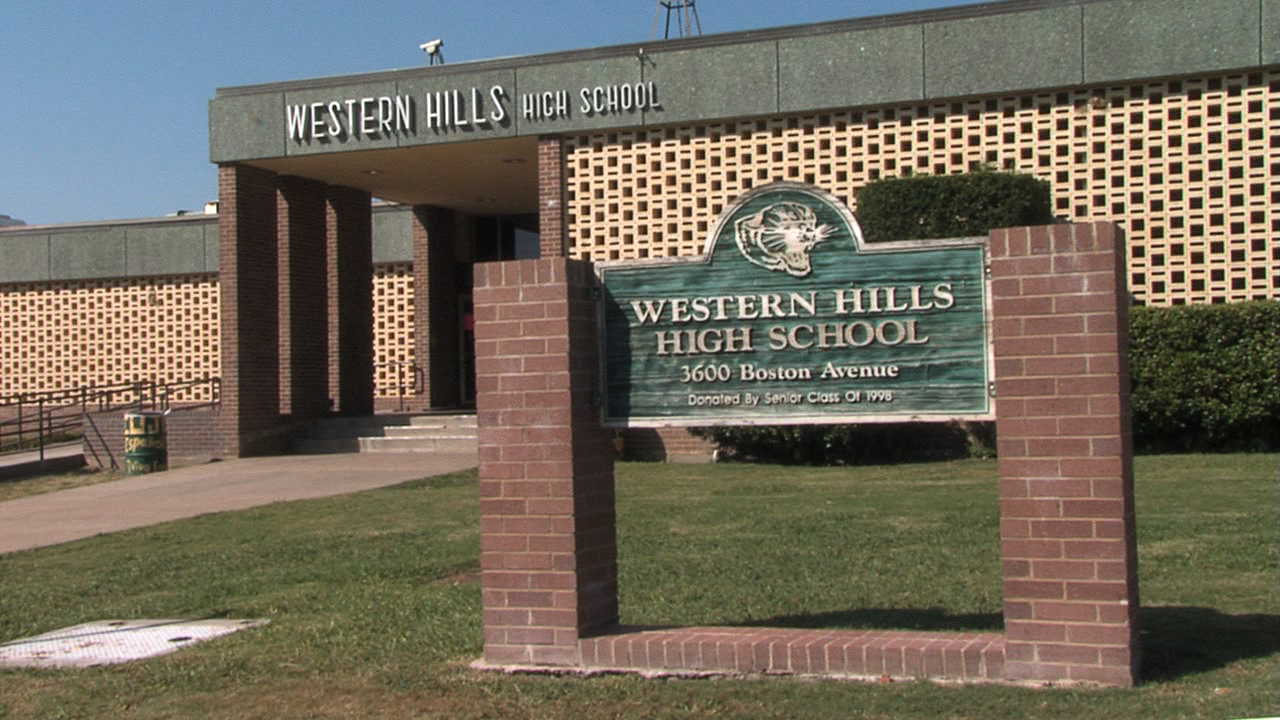
When you hear some stories, you immediately think, “I know where that happened.” So when such things happen in places outside the norm, we tend to get a little shocked. This week a high school freshman was suspended for making a comment that he was a Christian and he believed being homosexual was wrong. I immediately assumed that the situation occurred in California or New York, but much to my surprise it happened right here in Cowtown—Fort Worth, Texas.

According to news reports, the student at Western Hills High School on the west side of Fort Worth was in German class when the discussion of religion and homosexuality in Germany arose. He turned to a friend in the class and said, “I’m a Christian and I believe being gay is wrong.” The teacher heard his comment, wrote an infraction, and sent him to the assistant principal’s office where he received a three-day suspension.

The next day, his mother arrived with an attorney to discuss the matter with the principal. Thankfully, the principal rescinded the suspension and removed it from the student’s record, allowing him back into class with no further repercussions.

Even in a world of political correctness where teachers are all but required to be non-religious, this situation still seems a little strange. Reports suggest that the teacher has regularly introduced the topics of religion and homosexuality in the classroom:

[Attorney Matt] Krause called the incident “mind blowing” and said the teacher had frequently brought homosexuality into ninth grade classroom discussions. “There has been a history with this teacher in the class regarding homosexual topics,” Krause said. “The teacher had posted a picture of two men kissing on a wall that offended some of the students.” Krause said the picture was posted on the teacher’s “world wall.” “He told the students this is happening all over the world and you need to accept the fact that homosexuality is just part of our culture now,” Krause said.

These actions raise a very interesting question for public schools. Should a student’s cultural views—influenced by his religious beliefs—be stifled while a teacher is allowed to promote his beliefs about a controversial subject? The school system will face a very difficult decision about whether or not to become completely non-religious, non-controversial, non-cultural or to allow for some expression of differing viewpoints without the threat of punishment.

The implications of the latter—which seem to be in line with the spirit of the First Amendment—could be a two-edged sword. On one hand, we would applaud the ability of the student to express his belief in a sincere and respectful way. On the other hand, it would also seem to allow for the teacher at least to express his support of homosexuality. Now I certainly do not believe that the teacher should be allowed to push a homosexual agenda in class (especially a German class), but I do believe that students should be allowed to articulate alternatives to his view without fear of punishment or retaliation.

I can see some limited application of this discussion in a German class. Having studied four languages other than English, I recognize that there are some cultural aspects of learning a language. Most language teachers want their students to have an understanding of the culture behind the language, so I can see where discussion of religion could find its way into a German classroom. Let’s face it, one of the most central figures of Protestantism was German—Martin Luther. His translation of the Bible to German is still influential today. A balanced discussion of historical and contemporary religious issues in Germany could be fruitful for students learning the language. The problem with this teacher’s presentation is that it was not balanced. He pushed an agenda and punished a student who disagreed.

Of course there are limits to such discussions in the classroom, and an understanding of the maturity level of the students is necessary for having such discussions. It would never be appropriate for a public school teacher to have such a discussion with a third grade class; however, high school may be a different story. You may protest and say, “I don’t want my ninth grader exposed to such conversations in class!” I would counter with the realization that such conversations are already taking place in the hallways and locker rooms, so the controlled environment of the classroom may be better. In addition, as parents we need to prepare our children to articulate their positions effectively even when it is in opposition to a teacher’s position. At least while they are in high school, we have the opportunity to help them formulate their positions and support them in such discussions in class. When they move away to go to college and these same conversations arise, it may be too late.

So what do we take away from this? Let’s answer a couple of questions. Was the teacher wrong in punishing the student? Yes. He punished a student for disagreeing with his personal position. The student’s belief does not prevent him from learning German. The teacher was simply wrong. Outrage over the suspension is indeed appropriate, and the teacher should probably face disciplinary action for the way he handled the situation.

Should these discussions take place in school? To a certain degree, I say yes. Within a controlled environment where the students and teachers are mature enough to handle the discussion, it could be useful. To prevent such conversations would also prevent discussion of creation and intelligent design that many believers are fighting to get back into the classroom. Since those positions are often labeled “religious,” I am not willing to block all “religious” discussions in the classroom.

Should these conversations be taking place somewhere else? This is the most important question. Yes, they should happen in the home and church. We should not shy away from such topics at the dinner table. We need to tell our children what the Bible says about these things and prepare them to express their beliefs in a hostile environment. Don’t wait for the topic to come up in school—prepare for them in advance.

In 1 Peter 3:15, Peter instructs his readers, “Sanctify Christ as Lord in your hearts, always being ready to make a defense to everyone who asks you to give an account for the hope that is in you, yet with gentleness and reverence.” Let’s be prepared to give a defense for what we believe and direct them back to the hope we have in Christ.

_________________________

Lari Barager, “Student Suspended for Saying Gay Is Wrong,” Fox 4 News, September 21, 2011.

Todd Starnes, “Texas School Punishes Boy for Opposing Homosexuality,” FoxNews.com, September 22, 2011.

Eva-Marie Ayala, “Western Hills student suspended for denouncing homosexuality has punishment reversed,” Star-Telegram, September 22, 2011.

For audio from a recent conference where I addressed some of the issues related to homosexuality, see Southwestern’s Biblical Manhood and Womanhood Conference audio.