One Woman, Two Husbands

ABC’s “Good Morning America” aired a story this week on a different kind of “modern family.” This family is composed of one woman, two men, and a young boy. The story is about a woman named Gia who, in her words, gave up searching for “the one” so that she could have “the one and the one and the one and the one.” They are a polyamorous “throuple” (as George Stephanopoulos called them).

The difference between polyamory and polygamy revolves around marriage. While polygamy refers to multiple marriages and most typically has in mind one man with multiple wives, polyamory does not require marriage and can include any combination of men and women in a “committed relationship.”

The story of Gia, Ian, and John is quite interesting. The son in the family is the biological child of Gia and Ian. Gia describes her relationship with Ian as one of passionate romance. She describes her relationship with John through an analogy of an old pair of favorite shoes.

As the “family” is interviewed together, everyone puts on his/her best face. However, in a separate interview by himself, John admits to bouts of jealousy because he is the one who plays the role of domestic servant more than husband or lover. John quit his job, takes care of the son who is not his, and does most of the chores around the house. Even his body language screams, “I am the third wheel.”

If this relationship were not unusual enough already, the “throuple” admits that they are allowed to date outside of their relationship and could even bring another person into the “family.” They claim this would bring a “jolt of relationship energy” into their lives. The story reveals that Ian is currently dating someone else, and there is always the possibility of one of the other members of this relationship to bring another person into the mix.

So what should we make of this? First, we need to recognize that polyamory is most likely not going away. Research shows that polyamorous relationships are growing.

Second, the next step along the way for polyamory will be legal recognition as a “marriage-like” relationship. As the government and courts continue the quest for a redefinition of marriage, polyamory will ultimately be included. If the battle for legal recognition of homosexual marriage clears the courts, polygamy and polyamory are just another step down the road.

Third, we need to recognize that polyamory is a distortion of God’s design for marriage and relationships in general. In Genesis 2:24, we read, “For this reason, a man shall leave his father and mother, and be joined to his wife; and they shall become one flesh.” From the beginning, God designed marriage to be monogamous. God designed for the sexual relationship to be contained within the bounds of a lifetime, monogamous marriage (Hebrews 13:4).

Fourth, we need to continue the fight for defining marriage as a relationship between one man and one woman. Our society is embarking on a slippery slope with a possible redefinition of marriage to include homosexual couples and polygamous relationships. Opening the door on one of these distortions of marriage will open the floodgates for the others, including polyamory and incestuous marriage. We cannot simply turn a blind eye to this lifestyle and say that our society will never buy into it. The fact that it was presented on “Good Morning America” in such a positive light demonstrates the attempted normalization of this lifestyle.

_________________________

Good Morning America, “Modern Families: 2 Dads, 1 Mom and a Baby,” January 4, 2012.

Church to Vote on Continuing Heterosexual Marriage Ceremonies

A church in Raleigh, NC, is gearing up for a vote on November 20 to decide if it will stop holding “state-sanctioned marriages” on their property. According to an article in Raleigh’s News & Observer, the deacon council at Pullen Memorial Baptist Church drafted a marriage equality statement in response to pastor Nancy Petty’s conscientious objection to endorsing marriages involving a state license for heterosexual couples while the state forbids same-sex marriage. Brooks Wicker, the co-chair of the deacon council stated,

For us, it’s very much a civil rights issue. It’s in keeping with our tradition of trying to live into the gospel, treating everyone justly and fairly.

On Nov 20, the congregation will hold a vote to determine the future of marriage ceremonies at the church. While this may seem unusual, Pullen Memorial is no stranger to the unusual in Baptist life. The church began embracing the “social gospel” and ecumenism in the 1930’s. In 1950, Harry Emerson Fosdick delivered the dedication sermon for their new sanctuary. In 1992, the church endorsed “unqualified acceptance” of gay and lesbian members. This move ultimately led to their ouster from the Raleigh Baptist Association, Baptist State Convention of NC, and Southern Baptist Convention.

Now the church stands on the cusp of eliminating marriage ceremonies for the foreseeable future from their practice. Petty, a self-professed lesbian, told the congregation that endorsing state-sanctioned marriages for heterosexuals was a burden on her conscience, and the church responded by bringing it up for a vote.

The real question here is whether or not God gets a vote in this matter. Wicker noted that he believed it was in keeping with the church’s tradition of living “into the gospel,” but I believe he has the direction wrong. It appears that “living into the gospel” is a way of adding cultural biases to the gospel. He sees gay-marriage as a civil right that needs to be affirmed by the gospel and that our lives change the gospel. However, Scripture suggests that we need the gospel to live in us and allow it to change us. Rather than living into the gospel, I want the gospel to live in me.

So what should we make of this vote? I think it is fairly clear from their history and current trajectory that Pullen Memorial will vote to cease all marriages until same-sex marriage is legalized by the state of NC. The unfortunate part of the vote is that a church will most likely vote contrary to Scripture. From the institution of the first marriage in Genesis 2, God has made it clear that marriage is between a man and a woman. In Genesis 2:22–24, we read:

The Lord God fashioned into a woman the rib which He had taken from the man, and brought her to the man. The man said, “This is now bone of my bones, and flesh of my flesh; she shall be called Woman, because she was taken out of Man.” For this reason a man shall leave his father and his mother, and be joined to his wife; and they shall become one flesh.

Throughout the rest of Scripture, every reference to marriage is always between a man and a woman. In Leviticus 18:22 and 20:13, homosexual activity is clearly condemned (called an abomination), and that condemnation is repeated in Romans 1:24–32 and 1 Corinthians 6:9–11. Scripture makes it very clear that homosexual activity is against nature and against God’s intended design. Attempting to dignify it by placing the label of “marriage” on it simply flies in the face of what God intended for marriage as well.

So will God get a vote at Pullen Memorial? Let’s think about this—theology is not governed by democracy. Majority vote does not decide what truth is. God gets the only vote that matters, and he has already cast the deciding vote on this issue. Marriage is a covenant between one man and one woman. It is designed to last a lifetime. No church vote can change that. If Pullen Memorial wants to be on the side of God, they will change their stand on homosexual marriage. If they don’t, then they aren’t really attempting to be a church in submission to Christ and his Word. They might as well change their name to Pullen Memorial Social Club.

_________________________

Josh Shaffer, “Church puts civil marriage rites to vote,” News & Observer, November 11, 2011.

I would like to thank my friend, Randy Mann, for bringing this article to my attention. Check out his website at www.randymann.net.

Expiration Dates on Marriage Licenses

ABC News reported that Mexico City lawmakers are proposing legislation that would allow couples to set an “expiration date” for their marriage licenses. Rather than making a commitment for life, the new marriage licenses would allow newlyweds to determine if they want to commit to simply two years and evaluate any extensions after that.

Leonoel Luna, the official who authored the proposed legislation stated:

The proposal is, when the two-year period is up, if the relationship is not stable or harmonious, the contract simply ends. You wouldn’t have to go through the torturous process of divorce.

In Luna’ defense, he recognizes that the process of divorce is long, difficult, and painful. There is plenty of collateral damage that comes from divorce, and I believe he is probably being sincere in his desire to prevent such pain. However, he has a completely wrong understanding of marriage. Rather than viewing marriage as a covenant, he sees marriage as a contract.

This current proposal sounds much like a sports contract. Right now we are in the throes of the World Series, and last night’s game had plenty of commentary about where different players had played. In fact, one player started the season for the Rangers but is now on the roster of the Cardinals. When a player signs a contract, he has terms for pay and length of contract. If things don’t work out, the team can simply refuse to re-sign the player. The contract ends, and both parties move on.

Marriage is not supposed to be that way. Throughout Scripture we see that marriage is described as a covenant through explicit statements (Prov 2:16–17; Mal 2:14) and comparisons to the covenant between God and his people and Christ and the church (Isa 54:4–8; Jer 3:14; Hosea 1:1–3:5; Eph 5:22–33; Rev 21:9). The covenantal model of marriage depicts marriage as a creation ordinance given to all people that creates a permanent bond between a man, woman, and God. Covenants cannot be broken arbitrarily at the whim of the parties involved.

The contractual model of marriage espoused by this legislator makes marriage nothing more than a legal transaction between two individuals for mutual benefit. In a contract, once one person no longer receives the agreed upon benefit, the contract can be broken. The reason this model does not work in marriage is because it bases the security of marriage on the ability of sinners not to sin. Theoretically, a “partner” in the contract would have an escape clause once he/she is wronged. In marriage, that probably happens weekly—if not daily.

Some people may respond with the thought. “This is just the world acting like the world.” Unfortunately, many people in our churches have the same understanding of marriage. They consider marriage to be a contract ruled by the civil laws of the day. Once they feel wronged, they begin looking for a way out. This is evidenced by Barna’s research that the rate of divorce among self-identified born-again individuals is the same as that of American society at large.

The solution to the divorce problem in our culture is not temporary marriage licenses. Instead, the solution is seeing marriage the way God sees it—permanent, covenantal, and sanctifying. Unfortunately, many both in the church and outside are not convinced. Therefore, we need to start by proclaiming God’s design from marriage in our churches. Once we start to look different from the world, then we may earn a hearing in our culture.

_________________________

Christina Ng, “Mexico City Considers Temporary Marriage Licenses,” ABC News, September 30, 2011.

The Barna Group, “New Marriage and Divorce Statistics Released,” March 31, 2008.

One Man, 150 Children

According to an article posted yesterday on The New York Times, the Donor Sibling Registry has identified 150 half siblings from one anonymous sperm donor. The article notes:

As more women choose to have babies on their own, and the number of children born through artificial insemination increases, outsize groups of donor siblings are starting to appear. While Ms. Daily’s group is among the largest, many others comprising 50 or more half siblings are cropping up on Web sites and in chat groups, where sperm donors are tagged with unique identifying numbers.  

I addressed the issue of egg and sperm donation as an ethical dilemma in January, but this issue continues to creep back into the picture. While the article to which I responded in the winter celebrated the idea of donation, this current article paints a much darker picture. The author states:

Now, there is growing concern among parents, donors and medical experts about potential negative consequences of having so many children fathered by the same donors, including the possibility that genes for rare diseases could be spread more widely through the population. Some experts are even calling attention to the increased odds of accidental incest between half sisters and half brothers, who often live close to one another.

The interesting thing is that there are few regulations in the United States governing the donation of reproductive material. Donors remain anonymous and are simply assigned a unique identification number. Men can donate a seemingly unlimited number of times. Potential mothers typically request a specific donor’s sperm with no idea of how many other children have been conceived with his genetic material. Behind all of it, donor banks make a fortune from the sperm of popular donors.

Wendy Kramer, founder of the Donor Sibling Registry, states, “Just as it’s happened in many other countries around the world, we need to publicly ask the questions ‘What is in the best interests of the child to be born?’ and ‘Is it fair to bring a child into the world who will have no access to knowing about one half of their genetics, medical history and ancestry?” These questions are legitimate questions to ask the government and the industry behind this growing problem.

In Great Britain, regulations have been in place since the early 1980’s to limit the number of offspring a single donor could father (10 per donor). While most donors in the U.S. are promised a small number of potential offspring, many have found that they now have dozens of children. The article states:

Ms. Kramer, the registry’s founder, said that one sperm donor on her site learned that he had 70 children. He now keeps track of them all on an Excel spreadsheet. “Every once in a while he gets a new kid or twins,” she said. “It’s overwhelming, and not what he signed up for. He was promised low numbers of children.”

So what are we to make of this? As I noted in January, the biblical model of procreation is intended to take place within the confines of marriage (Gen 1:28; 4:1; Heb 13:4). The introduction of donors (sperm and/or eggs) creates an unusual moral dilemma that raises the question of adultery. Have these reproductive technologies created a new category of adultery—reproductive adultery?  While difficult to say for certain, we certainly need to raise that question.

In addition, the article describes another set of problems that often go unnoticed—those related to the children.

Experts are not certain what it means to a child to discover that he or she is but one of 50 children—or even more. “Experts don’t talk about this when they counsel people dealing with infertility,” Ms. Kramer said. “How do you make connections with so many siblings? What does family mean to these children?”

How will children deal with the fact that they have dozens, or even hundreds, of siblings? While many parents typically want to keep it a secret from their children that they were conceived with the help of donors, can they afford to do so with the possibility of incest?

Technology is a great thing, but too often we accept the benefits of technological advances without considering the long-term ramifications. This is one example of something that has the potential to cause great problems in the future—and the future is now.

_________________________

Jacqueline Mroz, “One Sperm Donor, 150 Offspring,” The New York Times, September 5, 2011.

The Donor Sibling Registry, https://www.donorsiblingregistry.com/.

Evan Lenow, “Who’s the Mother?: The Tangled Web of New Reproductive Technologies,” January 11, 2011.

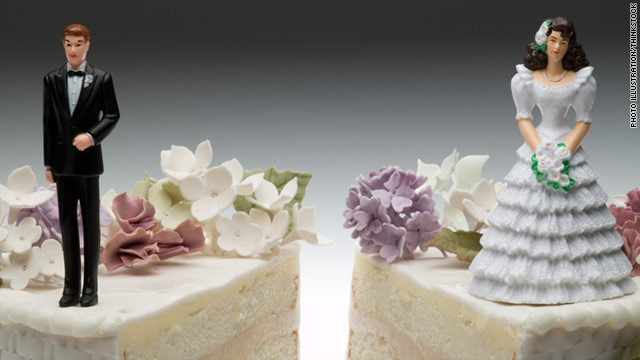
Divorce in the Bible Belt

Data from the 2010 Census has been flowing steadily for the last few months. Much of it has been the typical stuff—total population, redistricting issues resulting from population shifts, etc. Some of it is encouraging, but some not so much. CNN.com ran a story on a report released yesterday by the U.S. Census Bureau about marriage and divorce statistics, and the numbers are ugly. Here are a few snippets:

While the Bible Belt is known for its devotion to traditional values, Southerners don’t do so well on one key family value: They are more likely to get divorced than people living in the Northeast.

Southern men and women had higher rates of divorce in 2009 than their counterparts in other parts of the country: 10.2 per 1,000 for men and 11.1 per 1,000 for women, according to a new report from the U.S. Census Bureau released Thursday.

By comparison, men and women in the Northeast had the lowest rates of divorce, 7.2 and 7.5 per 1,000, which is also lower than the national divorce rate of 9.2 for men and 9.7 for women.

For those of us who call the Bible Belt home and think all things Southern are superior (food, culture, people—can I get an “Amen”?!), these statistics probably seem shocking. In fact, I did not believe them, so I set out to disprove them. Unfortunately, they seem to be fairly accurate.

Of course, statistics can say what the researcher (or reporter) wants them to say, and there are a couple of key factors buried in these statistics that are glossed over in the article. First, Southerners marry at a much higher rate than those in the Northeast. When you have more people marrying, then you have more opportunity for divorce. Second, the South is not the overtly religious region it used to be. Places like Texas, Florida, and Tennessee have become the homes of transplants from other parts of the country that often do not share the “steeped-in-religiosity” tradition of the South. These people have come for the weather, jobs, or tax benefits, but they are not Southerners by birth (or as the bumper sticker reads: “American by birth, Southern by the grace of God!”). In fact, native-born Southerners often no longer hold the values their parents or grandparents did.

The other difficult part of reading these statistics as gospel truth is that they merely report a snapshot in time. They give the total number of divorces that occurred in 2009 per every 1,000 adults (age 15 and older) in the population at that time. What is not told in the initial numbers is how long those marriages lasted before divorce and the prospects of durability for new marriages in 2009 and forward. If you dig deeper into the Census Bureau report (and not reported in the news article), you see that the duration of current marriages for women in their first marriages is much higher across the South and Midwest than in the Northeast. Therefore, Southerners stay married longer despite the fact that they divorce at a higher rate.

So what does this say about the Bible Belt? First, I believe it demonstrates religion is oftentimes more of a cultural expectation than a personal conviction. While Southerners claim to be religious, it does not always translate into how they live their lives—especially their marriages. Second, we see that marriage is in a precarious state everywhere—not just the “liberal” Northeast and West Coast. While marriage is more of a social norm in the South, it does not make it any easier to have a good marriage that lasts. Finally, the churches in the Bible Belt must not rest on their laurels of cultural significance to influence marriage. Instead, the churches need to fight to protect the marriages of the people in their congregations. Marriage is a picture of the relationship between Christ and the church (Eph 5:22–33). How can we clearly communicate the love Christ has for the church if our marriages are falling apart?

_________________________

Katia Hetter, “What’s Fueling Bible Belt divorces,” CNN.com, August 25, 2011.

Diana B. Elliott and Tavia Simmons, “Marital Events of Americans: 2009,” United States Census Bureau, August 2011.

Image credit.