Waylan Owens, my friend and colleague at SWBTS, has written a very pertinent post regarding the role of pastors in officiating wedding ceremonies in light of the current same-sex marriage debate. With years of experience as a pastor and seminary professor, Dr. Owens’ words hit the nail on the head. Here is an excerpt:
This is an open post to pastors and to all ordained ministers who hold firmly to the Scriptures.
The time of testing is here. However the Supreme Court rules on the matter, marriage between two men or between two women is here to stay. Legislators have found little strength to fight this movement, and it will not go away. So, pastors, now is the time to be sure you are prepared.
Do not be fooled. As homosexual marriage is legalized, pastors will have to come face to face with reality and answer this question: If I have married people without requiring biblical standards, based upon the fact that I could minister to them, how can I not do the same for homosexual couples? I believe that many will begin to answer the question with the same old answer: I do it so that I can minister. This will happen first in liberal churches and in churches in which significant members have children who have declared as homosexuals. But I fear it will spread. And as it spreads, pastor, if you try to draw the line at homosexuals, you will be attacked as homophobic and worse, especially if you are not applying a consistent biblical standard.
It is worth your time to read the entire post here.
The recent blockbuster movie, American Sniper, has already earned more than $253 million around the world since its release just a few weeks ago. The movie tells the story of Chris Kyle, a Navy SEAL sniper, who is considered to be the most deadly sniper in U.S. history. The film, directed by Clint Eastwood, is graphic in its depiction of the violence of war, but it also sheds light on the struggles of the man who became known as “Legend” on the battlefield.
Given its massive success at the box office, it comes as no surprise that American Sniper has generated quite a bit of controversy as well. What struck me as interesting (and saddening) was a recent back-and-forth between producer Michael Moore and Fox News commentator Todd Starnes, both of whom invoked the name of Jesus to defend their respective positions.
Michael Moore has openly opposed the film and stated via Twitter:
Tomorrow's Sunday School (1) What Would Jesus Do? Oh, I know what he'd do — hide on top of a roof and shoot people in the back!
In these tweets, Moore implies that Chris Kyle participated in sinful, unbiblical, and un-Christian behavior by serving as a sniper in the American military during his four tours in Iraq. For those of you who recognize Moore’s work, such statements are probably expected in light of his political views.
On the other side of the spectrum, Todd Starnes responded to Moore’s tweets by focusing one of his “American Dispatch” commentaries on Moore’s views. In the middle of his commentary (starting at the 48 second mark), Starnes invoked the name of Jesus as well as he stated:
Well, I’m not theologian, but I suspect Jesus would tell that God-fearing, red-blooded American sniper, ‘Well done, thou good and faithful servant for dispatching another Godless jihadist to the lake of fire.’ But then again, I’m no theologian.
In stark contrast to the thoughts of Moore, Starnes concludes that Jesus would actually applaud Kyle for his work in the war and welcome him to heaven on the basis that he had personally ensured Islamic jihadists would end up in hell.
From a political perspective, I’d really have to hunt for a while to find much of anything to agree with Moore about. I’m probably going to line up with Starnes about 80–85% politically (although I often have problems with his rhetoric). However, in this case I think they both missed the point about Jesus.
I think Moore is asking the wrong questions for the most part. Would Jesus have participated in a war during his 30+ years on earth? Probably not. We have no record that he did and no reason to even speculate about it. However, Moore should be asking whether or not a legitimate government has the biblical authority to participate in war. On that question, the text of Scripture speaks fairly clearly. In Romans 13:1–4, Paul writes:
Every person is to be in subjection to the governing authorities. For there is no authority except from God, and those which exist are established by God. Therefore whoever resists authority has opposed the ordinance of God; and they who have opposed will receive condemnation upon themselves. For rulers are not a cause of fear for good behavior, but for evil. Do you want to have no fear of authority? Do what is good and you will have praise from the same; for it is a minister of God to you for good. But if you do what is evil, be afraid; for it does not bear the sword for nothing; for it is a minister of God, an avenger who brings wrath on the one who practices evil.
This passage has typically been interpreted to include a government’s right to take up arms and defend its citizens and the innocent. This authority is granted to the government by God. In Chris Kyle’s situation, he was acting as an agent of the government in an official capacity as a soldier. From the best we know, he only engaged enemy combatants in his role as a sniper. Thus, his actions seem to fall within the scope of the authority granted to government in Romans 13.
In his attempt to rush to Kyle’s defense, Starnes crosses the line by declaring that God is pleased with the fact that Kyle ushered unbelievers into a fiery judgment. The problem is that Starnes missed the point of the passage he quoted. Invoking the praise of the master from Jesus’ parable of the talents (Matthew 25:14–30), Starnes states that Kyle must have received a hero’s welcome in heaven upon his untimely death.
The problem here is that God does not rejoice in the death and judgment of those who do not trust in him. In 2 Peter 3:9 we read, “The Lord is not slow about His promise, as some count slowness, but is patient toward you, not wishing for any to perish but for all to come to repentance.” God does not rejoice in the condemnation of “another Godless jihadist to the lake of fire.” Instead, he is grieved that such a one never came to faith in Christ alone for salvation.
The fact of the matter is that war is a tragic consequence of the fall of mankind. War should never be pursued for its own sake. It should always be a last resort and a tragic necessity for the sake of restoring peace. Even though I believe waging just war is within the authority of the government, we should long for the day when there will be no more war. We learn about that day in Micah 4:3 where the prophet describes the last days as a time when “they will hammer their swords into plowshares and their spears into pruning hooks; nation will not lift up sword against nation, and never again will they train for war.” This is an eschatological reality, but it will only be realized after Christ returns. Until then, war will continue to be a part of this fallen world.
Finally, I want to address a point that Starnes made twice—he said he is not a theologian. By academic and professional standards, I guess you could say that I am a theologian. But so are you, and so is Mr. Starnes, and so is Mr. Moore. We are all theologians in one sense. When we approach the text of Scripture or declare what we believe (or don’t believe) about God, we are doing theology. Mr. Starnes may not have formally studied theology, and his theology in this particular commentary is weak in my opinion, but it is still theology.
Therefore, I would like to encourage us all to be careful when we apply the thoughts, words, or actions of Jesus to a particular situation. We need to make sure our theology is sound before we proclaim what Jesus would do or say.
The Supreme Court has just announced that it will hear four cases involving the constitutionality of same-sex marriage laws around the United States. The hearings will most likely be in April with a decision in June.
Two central questions will be considered according to the Court’s statement granting certiorari:
Does the Fourteenth Amendment require a state to license a marriage between two people of the same sex?
Does the Fourteenth Amendment require a state to recognize a marriage between two people of the same sex when their marriage was lawfully licensed and performed out-of-state?
The answers to these questions will decide the future of marriage across the United States. If the answer to the first question is “Yes,” then same-sex marriage will be legalized nationwide, and the second question would be irrelevant. If the answer to the first question is “No,” but the second question is answered “Yes,” then it will authorize de facto same-sex marriage across the country. If both questions are answered “No,” then the status quo will continue.
The New York Times notes:
The pace of change on same-sex marriage, in both popular opinion and in the courts, has no parallel in the nation’s history.
Based on the court’s failure to act in October and its last three major gay rights rulings, most observers expect the court to establish a nationwide constitutional right to same-sex marriage. But the court also has a history of caution in this area.
This could be one of the most pivotal decisions of the Supreme Court in a generation. It will impact the future of marriage in this nation for generations to come. This is a time for us to be in earnest prayer for the justices of the Supreme Court. I pray that they will uphold the design for marriage that God has created and has been recognized for all of human history up to the last decade. The future of marriage is at stake.
This is a guest post from my wife, Melanie. She originally wrote this post for Biblical Woman, the blog site for the Women’s Programs at Southwestern Baptist Theological Seminary. The post originally appeared here.
One of my goals this year is to read the Bible from beginning to end in 2015. Maybe you have that same goal. Whether or not, I do pray that one of your goals is to fall in love with God’s Word more than you have before, for there is nothing more satisfying and life changing than reading Scripture. On New Year’s Day, as I started the year reading those familiar chapters, I began to think about the potential for 2015. I love the New Year, for it is like a beautiful blank calendar waiting to be filled or a brand new book waiting to be opened and enjoyed. The “newness” of the beginning of Genesis correlates perfectly with the “newness” of a new year.
As I began to read, I took special notice of God’s actions as he created, knowing that every day of 2015 will be filled with those same promises.
God is the author of my days, weeks, and year. I can see throughout Genesis 1 how God creates out of nothingness. He simply says, “Let there be…” and it was. He was the creator of light, the sky, the birds that fill that sky and the food to feed those birds that fill that sky. Also, at the end of every stage, God declared that His creation was good. The new year is a vast expanse before us that God will fill with His purposes. He is the author of each of my days. I can plan, as men do, but God is the ultimate creator of all things including the happenings of my day. He will speak into my life and say, “Let there be this time of blessing or this day of trial. Let there be this sickness or this change of plans.” But no matter what happens, He will also say, “it is good”, because He is good and everything he creates is good (Ps 199:68). I can trust in this principle when I feel like life is slipping out of control or when I can’t see the sense of a situation. I can look to the heavens and see that the same God who created those skies, creates my days.
God has a plan for everything He creates. Everything God created in that first week had a purpose. Whether to provide light or darkness or nourishment or a balance to days and seasons, everything had a reason for God to bring it into being. At the pinnacle of it all, when God created man, his purpose was to fill the earth and rule over it. Man was created, in God’s own precious image, for a specific reason. You will find no room for happenstance within Scripture. There are no accidents or coincidences. I find rest and peace that my God is a God of purpose and, no matter what happens this year, He has a plan for my good and His glory.
God will provide in every way. Sometimes when the vastness of time is before me, I find myself not only uncertain of what the days will bring, but also wondering if I have what it takes to make it through. Will I have enough money? Resources? Wisdom? Courage? However, God intends for me to look at the future with hope and promise, not fear and trepidation. As God created the world, He provided for everything. He made sure the details were taken care of for every living thing to be able to survive and thrive. The days were the perfect length. The animals were satisfied and looked after and had a place to live and roam. Once man was created, God provided a helper suitable just for him and gave them both jobs to live and work and fulfill their purpose. Because God did those things and an innumerable amount more, I can have total faith that He will also provide for me in everything that comes my way. In the joys, He will provide, and in the trials, He will provide.
Sin will be available, but I have a choice. Unfortunately, life did not stay perfect for long in Genesis. We read in the third chapter, Adam and Eve chose to listen to their own reason and the reasoning of Satan himself and disobey God’s instructions for them. Despite all the things I have mentioned before, God’s perfect plans and provisions, Eve still chose to turn away from God and listen to the lies of Satan. As much as I don’t want to admit it, I know this year I will have the opportunities to do the same thing. Day by day, I can choose my own fleshly path or I can choose to follow fervently after God’s direction for my life. Just like in the garden, sin will always be available. However, I can also learn from Genesis that I have a choice.
God’s redemption is perfect. Finally and most wonderfully, we can learn from Genesis 1-3 that God’s redemption is perfect. Even when Adam and Eve sinned, God completely covered them and clothed them. God pronounced judgment on them, but at the end, described how sin will ultimately be defeated through Eve’s offspring. I pray this year I will make great decisions for God’s glory. However, the chances are good that I will make mistakes as well. Either way, my desire is for God’s redemption to speak so loudly through my life that those around me will see His grace and mercy at work.
As I look into 2015, my goals are set and my plans are made. However, in reading through Genesis 1-3, I am reminded that a wonderful God is ultimately in control. And based on those three chapters, I can trust him, have faith in Him, and rejoice in Him for he is my Author, my Provider, and my Redeemer this year and every year ahead of me.
This is a guest post from my wife, Melanie. She originally wrote this post for Biblical Woman, the blog site for the Women’s Programs at Southwestern Baptist Theological Seminary. The post originally appeared here.
I remember the moment very well. I don’t know the time or date, but I was sitting with my two oldest girls watching a show on our favorite network about people buying and selling houses. The next episode came on and the “couple” buying the house was two men. Before I could react with a pre-emptive, “Hey, let’s go outside!” one of my daughters said, “Why would two men be buying a house together without wives?” This began one of the dreaded conversations that a parent must have with their children, explaining to them the idea of homosexuality.
In regards to raising our children in a sinful world, a parent’s job is much like a sieve. When they are young, very little comes into a child’s life without the parent’s consent and approval. Whether it is through TV, books, or peers, we try to surround them with good, beautiful things. But over time, as our children become older, we must slowly open the sieve, allowing them to encounter more and more of the world. Sometimes it happens through some sort of media. Sometimes, through school. Sometimes, it is just standing in line at the grocery store. I will not tell you the exact appropriate time to begin discussing more worldly topics with your children. That is for you, your husband, and God to decide. However, if your children grow, which they have a habit of doing, conversations will arise, and it is wise to have a plan to engage with our kids about the culture around us.
1. Answer their questions until they are satisfied.
It takes supernatural wisdom to know when to speak and when to listen. However, God is faithful and will lead us and guide us as we lead and guide our children. When a question comes up, don’t shy away from the opportunity. Engage your child with as much of the truth as is needed at the moment. Try to satisfy their natural curiosity with pointing the conversation back to how wonderfully God created us or how much God loves us. For example, one of my kids asked a question regarding the lack of clothes a model wore on the front of a magazine in the checkout line at the grocery store. After answering her question in the most discreet way I knew how as I paid for my groceries, I turned the conversation to how our bodies are beautifully created by God and how we should adorn them in a way that honors the One who Created him. I didn’t avoid the question, but I turned the conversation to focus not on the sin of public nudity, but on our call to modesty.
2. Honor and encourage their common sense.
During a speech on the campus of Southwestern Seminary, Jennifer Roback Morse shared the idea that if we ever feel like we are constantly bombarded by liberal propaganda wanting to convince us of their lies, it is because we indeed are. The reason for this relentless battering ram of nonsense into our lives is because it takes a lot of brainwashing to overcome our own God-given common sense (Rom 1:18-32). God displays all over creation that men and women are different. In the same vein, simple human anatomy and physiology show us how same sex marriages are not natural. When my girls started asking questions after seeing the television show I mentioned before, one actually thought I was joking when I explained the situation. “That would never work,” she said. In a slightly different vein, a friend was teaching a small class of boys about how we can pray for China. In the flow of conversation, the fact arose that they abort baby girls because their culture values boys more. A smart boy spoke up and said, “That’s ridiculous. Who do they think all those boys are going to marry when they grow up and want to have families?” I think the leaders of China could learn something from the common sense of an 8-year-old.
3. Remember, God is sovereign and you can trust him with your children.
We are just recently getting into this stage of parenting. I excelled at the “closed sieve” stage. It was my delight to keep all the bad away and protect my kids. But, if my goal is to raise warriors for Christ (and it is), I must open the sieve of the world and allow my kids to get some field practice. The main thing that held me back, and still does if I allow it, is fear. I was afraid of what would happen if they saw too much or heard too much or were exposed to too much. However, once again, God reminds me that my children are not my own. I have them for a short amount of time, and then they will have to face the world on their own. It is my job to train them and teach them how to act in battle. Yes, your child might come home from school asking you about a word they heard. Or your child might overhear something on the news that they know is not right. Or a neighbor might practice a different lifestyle than yours and your child sees it. Whatever the situation, God is sovereign and trustworthy and as we do our job as parents, He will use all those hard conversations for His glory.
 Waylan Owens, my friend and colleague at SWBTS, has written a very pertinent post regarding the role of pastors in officiating wedding ceremonies in light of the current same-sex marriage debate. With years of experience as a pastor and seminary professor, Dr. Owens’ words hit the nail on the head. Here is an excerpt:
 The recent blockbuster movie, American Sniper, has already earned more than $253 million around the world since its release just a few weeks ago. The movie tells the story of Chris Kyle, a Navy SEAL sniper, who is considered to be the most deadly sniper in U.S. history. The film, directed by Clint Eastwood, is graphic in its depiction of the violence of war, but it also sheds light on the struggles of the man who became known as “Legend” on the battlefield.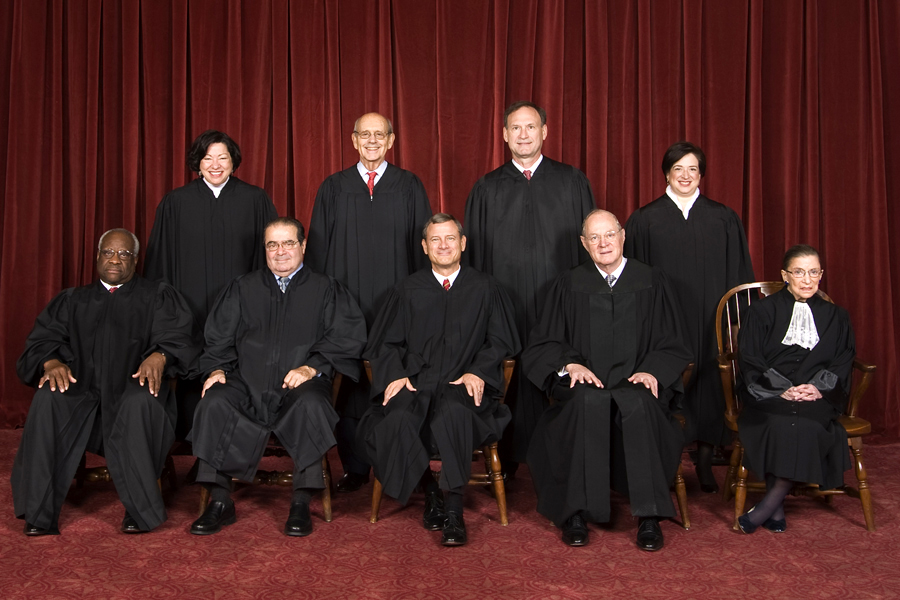

 Ethics as Worship